Last Call at Connie’s
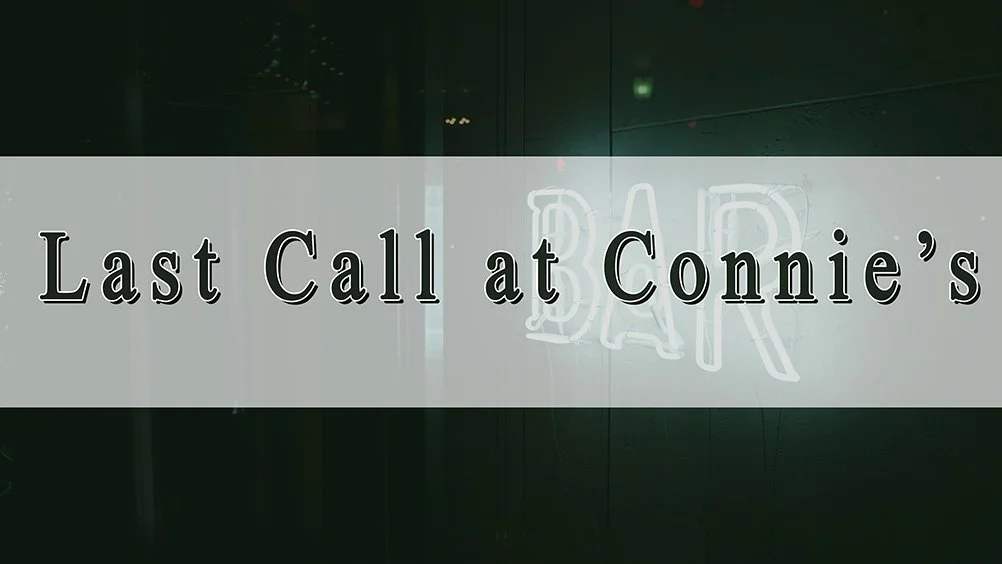
Photo by Alex Knight on Unsplash
It’s the last chance for Cal to reach out to the woman of his dreams. Will he do it? Can he do it?
Connie’s had been dying for years before anyone bothered to say so out loud. Connie herself had passed years earlier, and the bar began to lose its life when she did. For years, Cal had watched it happen, the way a family member watches their parents age and pass, by degrees, then all at once. The swinging bathroom doors bore wear marks from countless hands that had pushed them open over the years. The neon beer sign in the front window had developed a flicker in its second letter around 2019, and nobody had fixed it. Tonight it buzzed P_BST into the rain-slicked street, and tomorrow it would buzz nothing at all, because tomorrow Connie’s would be officially dead.
He moved through the closing routine without thinking. It was all muscle memory. Glasses face down on the rubber mat. Speed rail wiped, no need to restock tonight.
The last regulars left around eleven. Dave Randall and his construction crew, after talking about everything except the closing of the bar the way men do when they’ve been drinking and don’t want to examine the feelings swirling in their heads and hearts, shook his hand on the way out. Misty-eyed, Dave said he’d catch Cal “on the flipside.”
Cal was alone with the hum of the cooler when the door opened, and Clara walked in.
He had not allowed himself to hope for her arrival. Still, a part of him, a part he kept subdued, wanted her to show. Three years of hiding his feelings, and here she was, wet from the rain and slightly out of breath, unwinding a scarf the color of autumn.
“Still open?” she said.
“For another hour.”
She took her usual stool, third from the left, and he was already reaching for her favorite bourbon, Blanton’s, before she’d removed her coat.
She watched him pour. “You didn’t ask.”
“No. Care for something different to start?”
Clara didn’t smile, but her eyes lit up like they had a new flicker behind them. She wrapped both hands around the glass and cradled it. “I almost didn’t come. I walked past twice.”
Buy my debut novel, The Stone Harvest
He didn’t ask why she came back. He had hidden hopes for that part of it and didn’t want the illusion crushed if he was wrong—but he knew he wasn’t.
They talked about the bar, about the owner, and Connie’s eldest son, who’d sold out and moved away without a farewell party. About the regulars and where they’d end up drinking, probably the sports bar around the corner or just home. Clara talked about ordinary things in a way that made them feel like they all mattered to her. Cal had picked that up three years ago, on a Tuesday in November, when she’d come in after what was clearly a bad day and talked for forty minutes about a Sir David Attenborough documentary on migratory birds. Later, at home, he’d tracked down the documentary and watched it, thinking back to their chat about the snow geese and plovers.
While she talked, he worked on crafting something that had been in his head for most of a year. Mezcal, a half-ounce of elderflower liqueur, two dashes of bitters, and a curl of orange peel to highlight the taste and color. She would be the first to try it. He set it in front of her without comment.
She looked at it, then at him. “I didn’t order this.”
“No.”
“What’s it called?”
“November,” he said, looking at the drink instead of into her eyes.
She tasted it. She tried to find the words for it, but couldn’t quite manage. “Yes,” she said finally.
“Yes to what?” Cal asked.
“Just yes.”
He turned to wipe down the rail and process what might also be a yes.
She was quiet for a moment. Then: “I got the offer. In Seattle.”
His towel moved in slow circles. “When do they need an answer?”
“End of the month.”
“Good job?”
“Good enough.” She used her delicate fingers to turn the glass slowly on the bar. “I keep waiting to feel certain about it.”
He almost said something. He gave the words the same attention he’d given the drink: measuring, composing, imagining how it would be received. The moment passed. That happened a lot.
Last call was a formality with only one person left to hear it. He said it anyway, because some rituals deserved completion.
“One more,” she said.
He reached under the bar for the bottle he kept there — a twenty-four-year Macallan, his own stash, not for the customers. He poured two short glasses and set one in front of her.
She looked at the second glass. “Is this what you drink?”
“At the end. Yeah.” The end. He almost laughed to himself.
She picked it up and held it with both hands, as if it were something worth keeping safe and warm. They sat with it for a moment in the quiet of a place that had stopped being a bar and had become something else. The neon sign gave a long, electronic sigh and went dark.
“I used to think about what you were like,” she said, “when the bar was empty.”
He looked at her.
“I could never figure it out,” she said, almost an apology.
She finished her drink, sidled off the stool, and put on her coat, her eyes cast down at the bartop and the empty glass. At the door, she paused, one hand on the frame, looking over her shoulder, and said: “Take care.” Two simple words that carried more than a simple well-wish. Then she was gone.
Cal stood in the quiet for a while. Then he turned off the lights, moved through the room one last time, the way his hands knew without being asked, leaving her glass on the bar until last.
He looked at it once before grabbing it.
Then he washed it, turned off the final light, and stepped out into the rain.