Boundary
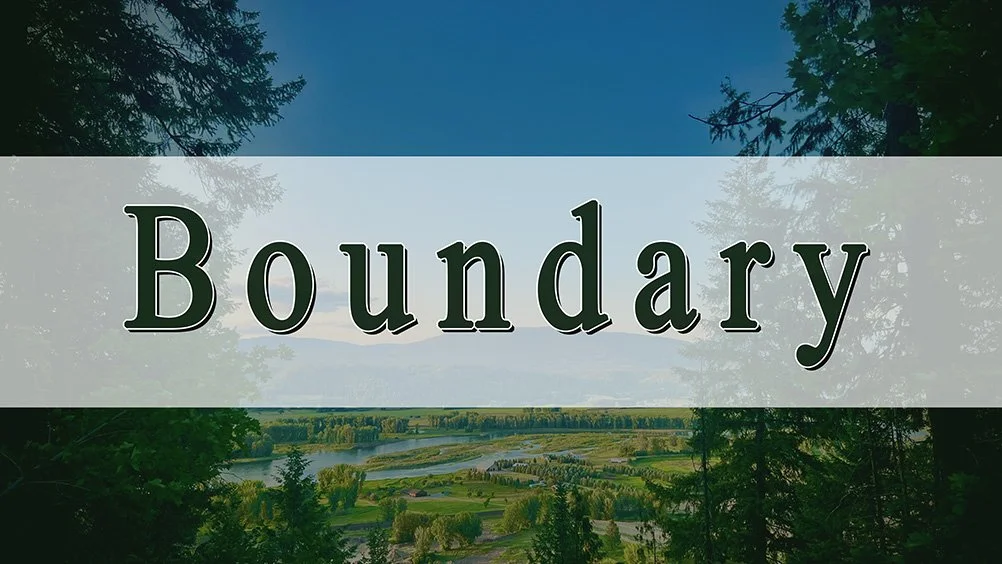
Photo by Troy Olson on Unsplash
Dale Cupp wants to stay away, but the town he served needs him — whether he likes it or not.
Dale Cupp had been awake since four-thirty. While that wasn’t unusual, what was unusual was that he hadn't been hungover. He'd been trying that for the past month; it didn't always work, but it had been getting easier.
He boiled water for his second round of coffee on the two-burner propane stove and looked out the window while he waited. The cabin sat on a logging road three miles east of Bonners Ferry proper, close enough to see the lights of town on a clear night but far enough away that no one came unless they meant to. The Kootenai River was running high this week, a sound like the valley breathing.
He'd been here eight months at this old family cabin. People in town still nodded when they saw him. That was the thing about small counties: folks in them remembered you long after you'd stopped being anyone worth remembering. He'd been a deputy here for eleven years under Roy Alden, and Roy was a sheriff who believed the job was about keeping the peace rather than proving a point. When Roy retired and Chet Mabry won the election, Dale lasted four months. Long enough to understand what the department was becoming, but not long enough to do anything about it.
He poured his coffee, black as always, and didn't think about what he couldn’t control anymore.
The mountains to the west were taking shape against the sky, the Selkirks shifting from black to the kind of dark blue they held just before sunrise, then lighting up like fireworks as the sun rose in earnest. Somewhere up in those ridges were patches of old-growth timber that three out-of-state companies had been circling for two years. That knowledge came to him the way he knew most things now, from the hardware store, from the gas station, from the accumulated hearsay of a small town that talked because there was nothing else to do. He'd stopped having opinions about it. Opinions required engagement, and engagement required giving a damn, and he was working very deliberately not to give a damn.
The morning passed with slow coffee and chores around the property until the phone rang at nine minutes past ten, interrupting the work.
He looked at it. It was an old pushbutton model on the kitchen wall, the cord kinked and yellowed from years of use. It rang again. He thought about the last time it rang, weeks ago now. He thought about the bottle in the cabinet, waiting.
He picked the phone up, hoping it was a salesman he could brush off.
"Dale." It was Carol Ayers who owned Lilly's. Her voice had something in it he hadn't heard from her before. "I need you to come down here. Don't call Mabry. Come down here first."
Read The Stone Harvest or Deadlined!
Lilly's sat on Riverside Street two blocks from the bridge, a low building with a gravel lot, a heavy door, and a hand-painted sign that had been faded since before Dale moved to the county. Carol had inherited it from her mother, Lilly, which was a detail that made Bonners Ferry a place where history lived in everyday life.
The front door was locked. A quick knock on the painted metal, and Carol answered the door. She opened it and practically dragged Dale inside. He moved into the dark and the smell, old beer, cigarette ash, the unique damp of a building that sat close to a river, and stopped.
Vern Stark was on the pool table.
He was on his back, arms at his sides, and someone had crossed his ankles for him, which was the detail that made Dale's stomach drop. Not the blood, which was dried and minimal, and located on the left temple. Not the stillness. The crossed ankles. Somebody had taken the time.
Carol went back behind the bar after she dragged Dale in, as if it were safer there. She had a cup of coffee in both hands, and she wasn't drinking it. She was a big woman, broad-shouldered, with gray coming in at the temples, and Dale had never seen her look small before. She looked small now.
"How long have you been here?" Dale said.
"Since ten. I open at eleven. I called you first thing. After I screamed and almost shit myself, that is."
"You touch anything?"
"No." A pause. "I touched the phone."
Dale walked a slow circle around the pool table without getting close to it. Vern Stark, one of those guys everyone knew, whether they wanted to or not. Stark did odd jobs. Some legit. Some not. There had been a thing two years ago, something about a family over on Smith Creek Road who'd been told their grazing permit wasn't getting renewed, and then they'd sold and moved to Coeur d'Alene, and Stark's name had been adjacent to that situation in ways nobody specified. Under Roy Alden, Dale had started pulling on that thread. Under Roy Alden, there hadn't been enough thread to pull.
"Why me?" he said.
Carol set down the coffee cup. "Because you're not him."
"Him being Mabry?"
"Him being Mabry."
Dale looked at the crossed ankles again. Vern Stark had not been a good man, which was different from saying he deserved this. He'd been a man who made himself useful to people who needed things done quietly, and that was as much of a contract as any piece of paper, and contracts sometimes came due in ways the smaller party didn't anticipate. The question was who had called in this debt, and why they'd left Vern here instead of up in the Selkirks, where the ground was soft, and the trees didn't talk.
"This is a message," Dale said.
Carol didn't answer.
"You know who it's for."
"I don't know anything." Her voice was flat and careful in the way that meant the opposite. "I came in and found him, and I called you."
"You called me before you called the sheriff."
"Yes."
"That's going to be hard to explain."
"I know."
Dale looked at her. She was looking at the pool table, not at Vern specifically, more like she was looking at the situation Vern represented, the thing he'd become now that he was lying there with his ankles crossed. She'd backed Roy Alden's campaign; Dale remembered that. Roy had lost. He wondered what she'd been told when she did it, and what she'd been told afterward, and whether any of those conversations took place in this building.
"I'm going to need you to call Mabry now," Dale said. "And when he gets here, you found the body at eleven o'clock. You called the sheriff immediately."
Carol looked at him. "And you?"
"I was never here."
He took one more look at Vern Stark, lying on the green felt, arms straight, ankles crossed, patient as a man waiting for a bus. Then he went out the back.
He drove north on Main Street and parked in front of the hardware store because it was a place a man could stand outside without looking like he was waiting for anything.
The Kootenai was visible from here, running wide and gray-green between its banks, carrying snowmelt down from the Canadian Rockies toward whatever rivers ran toward. The mountains still held snow, even in late May, the high ridges white against a sky that couldn't decide between blue and something harder. Dale had always thought the landscape up here did something to people over time. It didn’t so much corrupt them as wear down the parts that believed things could be different from the way they were.
Pete Sundberg came out of the hardware store with a box of roofing nails and stopped when he saw Dale.
"Morning," Pete said.
"Pete. You hear anything unusual this morning? Down by Riverside?"
Pete set the box on the hood of his truck. He was a careful man, a man who measured twice and still checked again. "Mabry's cruiser went by about twenty minutes ago. Lights on."
"That right?"
"That right," Pete agreed, and picked up his box and left, probably feeling like he had said more than he wanted.
That was how it worked here. Not refusal, exactly. More like everyone had learned to trade in the minimal, what they'd seen, what they couldn't deny, and leave the rest unspoken. Dale had policed this county for eleven years, and he'd always thought that reticence was just local character, the tight-mouthed inheritance of Scandinavian settlers who believed privacy was next to godliness. He was starting to think it was something else. He was starting to think it was practice.
He drove out toward the Kootenai Tribal lands on the north end of town and sat in his truck at the edge of a gravel pullout, watching the river. The tribe had spent the better part of this decade fighting for forty acres, a symbolic parcel the federal government had finally, grudgingly, deeded over last year. He'd read about it in the Bonners Ferry Herald. The editorial had been cautious, a way that meant the publisher had opinions he'd decided not to print.
Forty acres. Meanwhile, three timber companies were circling parcels fifty times that size in the Selkirks. He didn't know yet what the connection was. He knew there was one, the way you knew weather was coming, not from any single sign but from the way all the blank signs leaned the same direction.
He drove back into town and stopped at the Conoco on Kootenai Street, where a man named Gus pumped gas and knew most of what happened in Boundary County before it made the paper.
"Vern Stark," Dale said when Gus came around.
Gus looked at the old pump. "Heard he had some trouble."
"Where'd you hear that?"
"Same place I hear everything." He replaced the nozzle, dribbling a few drops of gas on the concrete pad. "You know Stark did some work for the Halverson Group."
Dale didn't know that. He kept his face like he did. "Halverson Group out of Spokane?"
"Spokane originally. They've got an office in Coeur d'Alene now." Gus wiped his hands on a rag that wasn't going to help. "They've been buying options on timber rights up in the Selkirks for about eighteen months. Quiet-like."
"How quiet?"
Gus looked at him with the expression of a man who had said more than he intended. "Quiet enough that you didn't hear it from me."
Dale paid for his gas and drove away, wondering when Gus would finally break down and get pumps with card readers. Probably never. If he did that, he’d have no reason to come out and talk with folks filling up.
He found Carol at her house on Ash Street, not at the bar, which meant Mabry had taken her statement and let her go, which meant either the investigation was moving fast or it wasn't moving at all. Dale had a guess which.
She opened the door before he knocked. She'd been watching from the window.
"I told you I'd handle it," she said.
"I know what you told me."
She let him inside. The house was clean with everything in its place, nothing decorative, a kitchen that smelled like coffee and dish soap. She sat at the table, and Dale sat across from her, and neither of them suggested that he remove his coat.
"Halverson Group," he said.
Carol looked at her hands. They were flat on the table, fingers spread, like she was steadying herself against something that hadn't announced itself yet. "Where'd you hear that?"
"Does it matter?"
"It might." She was quiet for a moment. "They approached me about eight months ago. Man named Birch, said he represented a timber investment group out of Spokane. Said they were assembling options on Selkirk parcels, and they wanted to know if I had interest in selling the building."
"Lilly's."
"The building and the lot. Said the whole Riverside corridor was going to change once the county approved the access road."
Dale went still. "What access road?"
Carol looked at him for the first time since he'd sat down. Something moved behind her eyes, relief, maybe, or its opposite. "The logging road they need to get equipment into the upper Selkirk parcels. It comes down through the east ridge and connects to Riverside about four blocks north of the bridge. Mabry pushed the county commission to approve the survey last fall. Quietly."
"How quietly?"
"It wasn't in the paper."
Dale sat with that. A logging access road through the Riverside corridor meant property acquisition, which meant the businesses and parcels along that route had value to Halverson beyond their face value. Which meant Lilly's wasn't just a bar; it was part of an infrastructure play. Which meant Carol's decision to back Roy Alden's campaign and her refusal to sell to Halverson had put her directly across from people accustomed to getting what they needed.
"Vern Stark," Dale said. "He was Halverson's man locally."
"He was Mabry's man. Halverson's money came through Mabry." She said it like she'd been holding it a long time and was tired of the weight. "Stark was the one who talked to the holdouts. Talked to them until they weren't holdouts anymore."
"The family on Smith Creek Road."
"Among others."
"And someone killed him and placed him on your pool table."
"Yes."
"To send Mabry a message."
Carol was quiet.
"Who, Carol?"
"I don't know." A pause that had some form and shape to it. "There's another group. Canadian, I think. They want the same parcels. They've been trying to get in front of the county commission for six months, and Mabry keeps shutting them out because Halverson's got him." She looked at the table. "Vern was on that pool table because somebody wanted Mabry to know his arrangement has competition. That the price of keeping Halverson exclusive is gonna keep going up."
Dale thought about the crossed ankles—the patience of it. Somebody had taken Vern Stark apart and then composed him, arranged him on that green felt like a document, something meant to be read carefully.
"Why didn't you sell?" he said.
"My mother built that bar."
It was the simplest thing she'd said all morning, and it hit him harder than any of it. He thought about Roy Alden, who'd been a sheriff who believed the job was about keeping the peace, and how Roy had retired to a small place outside Sandpoint and presumably kept his mouth shut about what he'd seen the county becoming. He thought about himself, four months under Mabry, and the specific morning he'd decided the thing to do was leave.
He stood up.
"Dale." Carol's voice had the something in it again, the thing he hadn't recognized on the phone. He recognized it now. It was the sound of a person who had been alone with something too long. "What are you going to do?"
He looked at her hands, still flat on the table, still steadying against the tilt.
"I don't know yet," he said, which was the most honest thing he'd said in eight months.
He let himself out.
He drove back out the logging road to the cabin and sat in the truck for a while with the engine off.
The Kootenai was louder now, as midday melt from the high country poured down, filling the spaces between the trees in a way that left little room for anything else. He had liked that about this place when he found it. The river was indifferent in a way that, at the time, gave him permission.
He went inside and stood at the window with no coffee this time, nothing in his hands.
He knew what the shape of it was now. Halverson Group buying options through Mabry, Stark moving the holdouts along, a Canadian interest that wanted in and had decided to make that want felt in a way that couldn't be ignored. A county commissioner or two somewhere in the middle, probably, men who had voted for the access road survey and told themselves it was progress, that timber jobs were timber jobs, and the county needed them. The tribe's forty acres up on the north end, which nobody in this arrangement had probably thought about for more than thirty seconds. Carol Ayers, who had backed the wrong man and refused to sell, was now the person who'd found the body, which made her visible in ways she hadn't been before.
Mabry would close it fast. Stark would become a transient, a drifter, a man whose associations were murky and whose enemies were unknown, and the department would exhaust its leads in about two weeks, and the file would go into a drawer and stay there. The bar would reopen. The access road survey would move forward. The options would convert to purchases, and the logging would begin, and the county would tell itself it needed the jobs, which was true, and that nothing else could be helped, which was also true in the way that things are true when enough people agree not to look at them.
He could call Roy Alden in Sandpoint. Roy knew the county, knew Mabry, knew what the department had been and what it had become. Roy would listen carefully and thank him and do nothing, because Roy was seventy-one and had a bad hip and had earned the right to be done.
He could go to the Herald. He could write it down, everything Carol had told him and everything Gus had let slip, and hand it to a reporter who would weigh it against his relationship with the county commission and his advertising revenue and his own sense of what Bonners Ferry was willing to hear about itself.
He could do nothing. He was good at that—eight months of practice.
The mountains to the west were in shadow now, the Selkirks going from blue to the type of dark that came before full dark, the snow on the high ridges holding the last light long after the valley had let it go.
He thought about Vern Stark's crossed ankles. He thought about Carol's hands flat on the table. He thought about a family on Smith Creek Road who had sold and moved to Coeur d'Alene and probably told themselves they'd had no choice.
He stood at the window.
The river kept going.