
Referral
A therapist discovers a troubling trend in her patients.

Photo by Alexander Pemberton on Unsplash
A therapist discovers a troubling trend in her patients.
The fifty-minute hour is a container that I use to help order my world. I use it because it’s useful and practical, like most things I rely on. I’ve built my modest but successful practice around them, these containers: the quiet between questions, or the deliberate arrangement of furniture.
Stephanie sits across from me on Wednesday after lunch in business-casual attire, ankles crossed, hands in her lap, and softly describes a man she used to call a friend. Now she calls him merely an acquaintance. That change came during the beginning of her fourth session. It’s a change I almost didn’t catch at first.
“He’s charming,” she says. “He had a way of making me feel selected.”
She laughs, perhaps a little self-consciously, at the word, embarrassed by how accurately it describes what she wanted.
I write: Selected.
“What did that feel like being chosen?”
She thinks about it. “It was like being the only person in a crowd. Like he could see the real me. He made me feel, I don’t know, special.”
I write nothing, but hold my pen tighter. I know that feeling. I’ve sat across from it. That mental note makes me pause for a slight moment.
Marcus arrives at three on Thursday, my last visitor of the day. He’s been referred for anxiety; the assessment of his family physician, not his own. He thinks he’s fine; he believes he has a heightened awareness of legitimate problems. This is a clarification I’ve heard before. His saying it so plainly is refreshing.
Twenty minutes in, he mentions someone from his building: a neighbor who’s been “helpful.” He’s almost apologetic about the word.
“He showed me where the recycling went; had me over for dinner once. He had a way of making me feel—”
My pen stops.
I look up. Marcus is looking out the window at some faraway spot.
“—like I owed him something. Not in a bad way. Just…you’re just aware of it.”
“Describe this neighbor,” I say.
He does.
The air stays still. The furniture stays where I’ve placed it. I keep my face unmoving. But something in me has gone silent, the way I did when Father came home in a sour mood.
I know who he’s describing.
I ask two more carefully chosen questions, followed by two deep and frankly long-winded answers, and I close my notepad at forty-eight minutes into the hour. Professional, contained. Marcus leaves, and I sit in silence. I sit in the space I’ve built, and I don’t move for a long time.
His name was Joel. He came to me four years ago, referred by a psychiatrist who’d found him cooperative but needed a second opinion on Joel’s obsessive behavior. I took him on for twelve sessions. He was the most self-aware patient I’d treated in years: articulate about his patterns, curious about the clinical framework, almost academic in how he engaged with the work. I thought he was doing the work well. I felt, and this is the part I didn’t examine at the time, satisfied, both with my assessment of his progress and that our sessions came to an end.
I discharged him with a note about strong insight and good prognosis.
What I didn’t write, what I smoothed over in my own notes, is that he had asked me, in the tenth session, how a person learned to stop fixating.
I explained it thoroughly, and he took notes. I described exactly how obsessive behavior presented, how it was managed, and what recovery looked like from the outside. That was easier for me than confronting the unacknowledged concerns I had about him.
Cara is my last appointment of the week. This is her tenth visit, and I know her speaking rhythm well enough to hear the difference in the first exchange. Something has tightened in her, her voice ever so slightly restricted. She describes a man she met at a work function three months ago, whom she initially found attentive. She doesn’t describe him with much physical detail, but says he’s always around in unoffensive ways. Helpful and present. Selecting.
She doesn’t use that word. I do, in my head.
She tells me about a night last week when she found herself doing something intimate with him, something she hadn’t planned, at a place she hadn’t intended to go. When she tried afterward to reconstruct how she’d made it there, she couldn’t find it. The decision had just come without thinking it through.
I ask her careful questions.
I lead her as far as I ethically can toward the words, toward the phrase, toward the doorway she’ll have to walk through herself. I can’t walk her through it. I can guide her. I can let her know the door is waiting for her.
She leaves at 3:55.
I sit in the room I’ve built. The chairs smartly spaced; the tissues within reach. The window giving back the last of the November light over the Spokane roofline, gray and flat; detailed and sharp. My notepad is open to a blank page.
Stephanie had mentioned early on that she’d found me through a social media post I’d made. Marcus’ family doctor sent him. Cara responded to a community board listing. Three different ways to find me. The only thing in common is the practice. The only thing in common is me.
I was his container once. The fifty-minute hour. The deliberate silence. He sat where my clients sit, and I asked my careful questions, and he answered with phrases that led me down the path he wanted me to walk.
I close the leather cover of the notepad.
I hear the silence.
I make a mental note to call my own therapist.

Grit
Patel travels across the Martian landscape to find a deserter. When he finds him, will he do his job—or follow his instincts?
Photo by Daniele Colucci on Unsplash
Patel travels across the Martian landscape to find a deserter. When he finds him, will he do his job—or follow his instincts?
Patel ripped the new work order from the printer and saw the ghost-pale corporate logo and heading. The name told him everything he needed to know about what kind of job it was.
He drove the crawler alone across the B17 basin; four hours of ochre hardpan, violet ridge lines, and rock formations that had been standing since before anything on Earth had even thought of forming into something worthwhile. After six years on Mars, it still wasn’t home. Maybe a safe harbor for a while, but not home.
The job was a retrieval order—Earnest Bauer, listed as a deserter. Last known coordinates were somewhere sensible people avoided, near the outer boundary. There, addresses stopped being addresses and became descriptions. East of the third relay. The silver dome with the dents. Patel had worked three jobs in the B-Ring fringe and knew that few people lived there by choice.
He had been a staff sergeant in the federal forces, doing dirty deeds with dirty soldiers for dirty reasons. Now he found people. Different, but somehow the same; finding dirty people in dirty places for dirty money.
Bauer opened the door as Patel approached.
He stood with an unhurried look, one hand on the doorframe, the other holding a coffee mug. He had had plenty of time to decide how he felt about the approaching guest and apparently had processed those thoughts well. Leaner than the service photo; more weathered. The current look came from years of hard work in an environment that didn’t seem to care about the weakness of the human body. The sun and cold had rearranged his face into a series of lines and fields and patterns looking as much like a topographical map as a man.
He looked at Patel the way you look at an approaching dust storm.
“Coffee,” he said, more a statement of what was about to happen than an offer.
The entirety of the module was a single room partitioned by purpose rather than by walls. A cot. A workbench buried in parts from any number of projects happening there. A heating unit working harder than it should have had to. The coffee pot looked to be a well-used feature.
The dog in the corner watched him with professional disinterest and went back to sleep.
Bauer handed him a cup and sat without clearing the metal table in front of them. The clutter didn’t embarrass him. He lived in his space the way the rock formations outside lived in theirs.
The coffee was awful. Really bad. Patel drank it anyway, though he noticed the grit floating and swirling on top. Just like back in the day.
“Took ‘em long enough,” Bauer said.
“Six years.”
“First year, second year; I kept thinking about it, about running deeper into the dust.” He picked up an old-fashioned book from the table and turned it in his hands. “By the fourth, I stopped. Whole thing seemed kinda silly at that point.”
“You didn’t run.”
“Nowhere worth running to.” He set it down. “Besides. I like it here.” He waved his hand around toward the land outside and then again to his meager possessions in his domed unit. “I like what I have.”
Patel looked at the room. Exposed insulation on the ceiling. A water ration gauge hovering near the lower third. One window with its view of hardpan, ridge, and a sky that looked no cleaner than any other part of the landscape.
“It’s rough,” Patel said.
“Yes.”
“Most people—”
“Most people are in the main station paying sixty percent of their wages for the privilege and comfort of the big dome.” No spite or malice in his voice. He was just stating a fact. “I own twelve hundred square meters of a lot of dirt and a lot of nothing. But it’s mine.” He paused, raised his mug to take a sip, and paused again. “The nothing is mine.”
Patel set his cup on the workbench beside a regulator whose mouthpiece mount had been stripped and re-threaded by hand. Careful work. Important work; a task that only confident and steady hands could do. Done wrong, it would mean death in a sandstorm.
Deadlined, A Karl Warren story
He hadn’t yet said why he was there, but it seemed Bauer had figured it out already. The calm face and determined eyes told him that he didn’t need to. The mark had figured it out the moment he stepped out of the crawler. Bauer was tolerating something that he knew might end him, as if he were offering tea to the snake poised to bite him.
The shame arrived with texture and pressure. A low persistent friction beneath everything. The thing you noticed when the other things went quiet.
He thought about the corporate header. Ghost-pale and visible only if you looked for it. He thought about a lot in a short amount of time. The bulk of his thoughts were on how his old dog, Bess, would have gotten up and greeted any visitor, no matter how worn out she was at the end.
It also crossed his mind that where he now lived, a twenty-square-meter metal cave in the worst part of the junction wouldn’t be a fit home for a dog. Maybe it was better that Bess was gone.
“I should tell you,” Patel said, returning to the moment, “that I’m very good at my job.”
Bauer sat and watched his hunter spin his wheels.
“I should also tell you I haven’t decided yet what my job is.”
Bauer stayed silent for a moment. Outside, the wind wanted to push against something and chose the module. It pushed hard for a minute. The heating unit cycled. The dog let out a sigh like its time in the red dust had rendered life too difficult.
“There’s more coffee,” Bauer said finally. “If you need time to figure it out.”
Patel looked at his empty cup, traces of red in the bottom.
“Yeah. I’ll have some more.”
Witness to the Flames
When a young girl sees something she shouldn’t, can she do what’s right, or will the consequences of speaking be too much for her? - A YA-inspired tale
Photo by Kyle Cleveland on Unsplash
When a young girl sees something she shouldn’t, can she do what’s right or
will the consequences of speaking be too much for her?
We didn’t have assigned seats, but everyone naturally avoided the desk where Olivia usually sat. It was in the front row, second from the window. She’d sit in class and sometimes take notes or doodle with her colored pens. Purple must have been her favorite color. She used it the most.
Mr. Garrett had her notebook on his desk, maybe waiting for her return. But she wasn’t coming back, and he might not know what to do with a book for a student who no longer attends; a notebook now belonging to an empty space in the room that no one but me notices. I watch the space every day in fourth period, but like everyone else, I say nothing about it.
The Stone Harvest, my debut novel
I often find myself drifting through the house at all hours, making tea that I’ll never drink or scrolling on my phone, hoping to be entertained until the fatigue finally grows strong enough. On the night of the fire, I sat at my desk by the window, writing in my journal, when I saw the truck. I’d seen it before in the church parking lot a hundred times: dark blue, lifted high, cracked rear window. No lights on, engine running, waiting. Across the street and two houses down from the Andersons’ place. Someone dressed in dark clothing moved along the back side of their house, someone whose walk and movement were familiar to me. Their face was covered by a dark hoodie over their head, but everything seemed to fit with who it might be. Minutes later, a fire started outside along the back side of the house, not inside, where they later said it did. I woke my parents and had them call the fire department.
Back in my room, on a fresh page of my journal, I wrote everything down that I saw: the truck, the man, who I thought it was, and where he went. It seemed important to do that, even though I never told my parents about what else I saw.
Faulty wiring, they said.
Father is on the city council and coaches Little League baseball. He knows which hands to shake and what questions to ask. At the council meeting discussing the fire, my father just nodded along and frowned like he had already made peace with the decision. Now and then, I recall that he, like me, was awake the night of the fire, and seemed almost mad at me for witnessing anything.
On a Tuesday, I came home early and heard him in the kitchen. He didn’t see me. He said something about the insurance company flagging the claim, and it could be months before it gets settled.
A pause.
“Well, that’s not really our problem, is it?”
He laughed in that way that older men do when something isn’t funny. My stomach churned violently. It churned because the ground underneath me moved, shifting my understanding of what my world had been built on.
Upstairs, I sat on my bed and looked at the journal on my nightstand.
Our problem. As though the Andersons losing their home were a random act rather than something done to them.
Deadlined, a Karl Warren story
I start doing the math in my head about gains and losses. How much weight is there in a journal entry of a teenage girl? Does that entry have enough weight to unblock the flow of some kind of belated justice? There are Father’s years on the city council and as a deacon. There’s the college recommendation letter sitting in the principal’s computer, waiting to be sent contingent on my being a good girl. How much could I lose?
Then I think of the empty chair in class and the sight of the rising flames.
I found Olivia’s profile through Sajni, who shared a class with us and is still friends with her online. In a DM, I ask if she’s okay. I know she can’t be, so it’s a stupid question.
“We’re in my aunt’s apartment. Four of us in two rooms. Mom doesn’t sleep.”
I stare at that and think of my own wandering at night.
“I’m sorry. I’ve been thinking about you,” I type.
“We’d finally found a place,” she writes back. “My dad checked out every town around to find the right house. He said it seemed like people would accept us.”
It wasn’t an accusation, but it landed like one. Her neighborhood struck them down, and I was part of that neighborhood. Deep down, I knew what I was going to do and why. I had to do something because I wasn’t the one suffering here. I’d been balancing action and inaction as if I were the one paying the bill, but I really wasn’t. The Andersons had already paid it. Their loss had been the raw material for my turmoil over the past days. Whenever I came close to feeling a type of calm, all I needed to do was think of their messed-up situation, and I would hurtle towards another round of confusion.
It was time to pay up.
With the journal open to the page with the entry from the night of the fire, I took a couple of pictures with my phone to make sure I captured everything I wrote.
What will come next? What will Olivia do with the information? Will it be enough? Will Father look at me differently when he comes home or across the dinner table?
I think about the empty desk in fourth period, the one that nobody wants to sit at yet.
I press send, and a read receipt appears almost immediately. She’s been waiting, like she knew I knew something. Now it’s my turn to wait, to see what comes of this simple action.
Outside, it’s dark. My father’s car pulls up in the driveway. Somewhere across town in her new and uncomfortable home, Olivia Anderson is looking at her phone.
Last Call at Connie’s
It’s the last chance for Cal to reach out to the woman of his dreams. Will he do it? Can he do it?
Photo by Alex Knight on Unsplash
It’s the last chance for Cal to reach out to the woman of his dreams. Will he do it? Can he do it?
Connie’s had been dying for years before anyone bothered to say so out loud. Connie herself had passed years earlier, and the bar began to lose its life when she did. For years, Cal had watched it happen, the way a family member watches their parents age and pass, by degrees, then all at once. The swinging bathroom doors bore wear marks from countless hands that had pushed them open over the years. The neon beer sign in the front window had developed a flicker in its second letter around 2019, and nobody had fixed it. Tonight it buzzed P_BST into the rain-slicked street, and tomorrow it would buzz nothing at all, because tomorrow Connie’s would be officially dead.
He moved through the closing routine without thinking. It was all muscle memory. Glasses face down on the rubber mat. Speed rail wiped, no need to restock tonight.
The last regulars left around eleven. Dave Randall and his construction crew, after talking about everything except the closing of the bar the way men do when they’ve been drinking and don’t want to examine the feelings swirling in their heads and hearts, shook his hand on the way out. Misty-eyed, Dave said he’d catch Cal “on the flipside.”
Cal was alone with the hum of the cooler when the door opened, and Clara walked in.
He had not allowed himself to hope for her arrival. Still, a part of him, a part he kept subdued, wanted her to show. Three years of hiding his feelings, and here she was, wet from the rain and slightly out of breath, unwinding a scarf the color of autumn.
“Still open?” she said.
“For another hour.”
She took her usual stool, third from the left, and he was already reaching for her favorite bourbon, Blanton’s, before she’d removed her coat.
She watched him pour. “You didn’t ask.”
“No. Care for something different to start?”
Clara didn’t smile, but her eyes lit up like they had a new flicker behind them. She wrapped both hands around the glass and cradled it. “I almost didn’t come. I walked past twice.”
Buy my debut novel, The Stone Harvest
He didn’t ask why she came back. He had hidden hopes for that part of it and didn’t want the illusion crushed if he was wrong—but he knew he wasn’t.
They talked about the bar, about the owner, and Connie’s eldest son, who’d sold out and moved away without a farewell party. About the regulars and where they’d end up drinking, probably the sports bar around the corner or just home. Clara talked about ordinary things in a way that made them feel like they all mattered to her. Cal had picked that up three years ago, on a Tuesday in November, when she’d come in after what was clearly a bad day and talked for forty minutes about a Sir David Attenborough documentary on migratory birds. Later, at home, he’d tracked down the documentary and watched it, thinking back to their chat about the snow geese and plovers.
While she talked, he worked on crafting something that had been in his head for most of a year. Mezcal, a half-ounce of elderflower liqueur, two dashes of bitters, and a curl of orange peel to highlight the taste and color. She would be the first to try it. He set it in front of her without comment.
She looked at it, then at him. “I didn’t order this.”
“No.”
“What’s it called?”
“November,” he said, looking at the drink instead of into her eyes.
She tasted it. She tried to find the words for it, but couldn’t quite manage. “Yes,” she said finally.
“Yes to what?” Cal asked.
“Just yes.”
He turned to wipe down the rail and process what might also be a yes.
She was quiet for a moment. Then: “I got the offer. In Seattle.”
His towel moved in slow circles. “When do they need an answer?”
“End of the month.”
“Good job?”
“Good enough.” She used her delicate fingers to turn the glass slowly on the bar. “I keep waiting to feel certain about it.”
He almost said something. He gave the words the same attention he’d given the drink: measuring, composing, imagining how it would be received. The moment passed. That happened a lot.
Last call was a formality with only one person left to hear it. He said it anyway, because some rituals deserved completion.
“One more,” she said.
He reached under the bar for the bottle he kept there — a twenty-four-year Macallan, his own stash, not for the customers. He poured two short glasses and set one in front of her.
She looked at the second glass. “Is this what you drink?”
“At the end. Yeah.” The end. He almost laughed to himself.
She picked it up and held it with both hands, as if it were something worth keeping safe and warm. They sat with it for a moment in the quiet of a place that had stopped being a bar and had become something else. The neon sign gave a long, electronic sigh and went dark.
“I used to think about what you were like,” she said, “when the bar was empty.”
He looked at her.
“I could never figure it out,” she said, almost an apology.
She finished her drink, sidled off the stool, and put on her coat, her eyes cast down at the bartop and the empty glass. At the door, she paused, one hand on the frame, looking over her shoulder, and said: “Take care.” Two simple words that carried more than a simple well-wish. Then she was gone.
Cal stood in the quiet for a while. Then he turned off the lights, moved through the room one last time, the way his hands knew without being asked, leaving her glass on the bar until last.
He looked at it once before grabbing it.
Then he washed it, turned off the final light, and stepped out into the rain.
Boundary
Dale Cupp wants to stay away, but the town he served needs him whether he likes it or not.
Photo by Troy Olson on Unsplash
Dale Cupp wants to stay away, but the town he served needs him — whether he likes it or not.
Dale Cupp had been awake since four-thirty. While that wasn’t unusual, what was unusual was that he hadn't been hungover. He'd been trying that for the past month; it didn't always work, but it had been getting easier.
He boiled water for his second round of coffee on the two-burner propane stove and looked out the window while he waited. The cabin sat on a logging road three miles east of Bonners Ferry proper, close enough to see the lights of town on a clear night but far enough away that no one came unless they meant to. The Kootenai River was running high this week, a sound like the valley breathing.
He'd been here eight months at this old family cabin. People in town still nodded when they saw him. That was the thing about small counties: folks in them remembered you long after you'd stopped being anyone worth remembering. He'd been a deputy here for eleven years under Roy Alden, and Roy was a sheriff who believed the job was about keeping the peace rather than proving a point. When Roy retired and Chet Mabry won the election, Dale lasted four months. Long enough to understand what the department was becoming, but not long enough to do anything about it.
He poured his coffee, black as always, and didn't think about what he couldn’t control anymore.
The mountains to the west were taking shape against the sky, the Selkirks shifting from black to the kind of dark blue they held just before sunrise, then lighting up like fireworks as the sun rose in earnest. Somewhere up in those ridges were patches of old-growth timber that three out-of-state companies had been circling for two years. That knowledge came to him the way he knew most things now, from the hardware store, from the gas station, from the accumulated hearsay of a small town that talked because there was nothing else to do. He'd stopped having opinions about it. Opinions required engagement, and engagement required giving a damn, and he was working very deliberately not to give a damn.
The morning passed with slow coffee and chores around the property until the phone rang at nine minutes past ten, interrupting the work.
He looked at it. It was an old pushbutton model on the kitchen wall, the cord kinked and yellowed from years of use. It rang again. He thought about the last time it rang, weeks ago now. He thought about the bottle in the cabinet, waiting.
He picked the phone up, hoping it was a salesman he could brush off.
"Dale." It was Carol Ayers who owned Lilly's. Her voice had something in it he hadn't heard from her before. "I need you to come down here. Don't call Mabry. Come down here first."
Read The Stone Harvest or Deadlined!
Lilly's sat on Riverside Street two blocks from the bridge, a low building with a gravel lot, a heavy door, and a hand-painted sign that had been faded since before Dale moved to the county. Carol had inherited it from her mother, Lilly, which was a detail that made Bonners Ferry a place where history lived in everyday life.
The front door was locked. A quick knock on the painted metal, and Carol answered the door. She opened it and practically dragged Dale inside. He moved into the dark and the smell, old beer, cigarette ash, the unique damp of a building that sat close to a river, and stopped.
Vern Stark was on the pool table.
He was on his back, arms at his sides, and someone had crossed his ankles for him, which was the detail that made Dale's stomach drop. Not the blood, which was dried and minimal, and located on the left temple. Not the stillness. The crossed ankles. Somebody had taken the time.
Carol went back behind the bar after she dragged Dale in, as if it were safer there. She had a cup of coffee in both hands, and she wasn't drinking it. She was a big woman, broad-shouldered, with gray coming in at the temples, and Dale had never seen her look small before. She looked small now.
"How long have you been here?" Dale said.
"Since ten. I open at eleven. I called you first thing. After I screamed and almost shit myself, that is."
"You touch anything?"
"No." A pause. "I touched the phone."
Dale walked a slow circle around the pool table without getting close to it. Vern Stark, one of those guys everyone knew, whether they wanted to or not. Stark did odd jobs. Some legit. Some not. There had been a thing two years ago, something about a family over on Smith Creek Road who'd been told their grazing permit wasn't getting renewed, and then they'd sold and moved to Coeur d'Alene, and Stark's name had been adjacent to that situation in ways nobody specified. Under Roy Alden, Dale had started pulling on that thread. Under Roy Alden, there hadn't been enough thread to pull.
"Why me?" he said.
Carol set down the coffee cup. "Because you're not him."
"Him being Mabry?"
"Him being Mabry."
Dale looked at the crossed ankles again. Vern Stark had not been a good man, which was different from saying he deserved this. He'd been a man who made himself useful to people who needed things done quietly, and that was as much of a contract as any piece of paper, and contracts sometimes came due in ways the smaller party didn't anticipate. The question was who had called in this debt, and why they'd left Vern here instead of up in the Selkirks, where the ground was soft, and the trees didn't talk.
"This is a message," Dale said.
Carol didn't answer.
"You know who it's for."
"I don't know anything." Her voice was flat and careful in the way that meant the opposite. "I came in and found him, and I called you."
"You called me before you called the sheriff."
"Yes."
"That's going to be hard to explain."
"I know."
Dale looked at her. She was looking at the pool table, not at Vern specifically, more like she was looking at the situation Vern represented, the thing he'd become now that he was lying there with his ankles crossed. She'd backed Roy Alden's campaign; Dale remembered that. Roy had lost. He wondered what she'd been told when she did it, and what she'd been told afterward, and whether any of those conversations took place in this building.
"I'm going to need you to call Mabry now," Dale said. "And when he gets here, you found the body at eleven o'clock. You called the sheriff immediately."
Carol looked at him. "And you?"
"I was never here."
He took one more look at Vern Stark, lying on the green felt, arms straight, ankles crossed, patient as a man waiting for a bus. Then he went out the back.
He drove north on Main Street and parked in front of the hardware store because it was a place a man could stand outside without looking like he was waiting for anything.
The Kootenai was visible from here, running wide and gray-green between its banks, carrying snowmelt down from the Canadian Rockies toward whatever rivers ran toward. The mountains still held snow, even in late May, the high ridges white against a sky that couldn't decide between blue and something harder. Dale had always thought the landscape up here did something to people over time. It didn’t so much corrupt them as wear down the parts that believed things could be different from the way they were.
Pete Sundberg came out of the hardware store with a box of roofing nails and stopped when he saw Dale.
"Morning," Pete said.
"Pete. You hear anything unusual this morning? Down by Riverside?"
Pete set the box on the hood of his truck. He was a careful man, a man who measured twice and still checked again. "Mabry's cruiser went by about twenty minutes ago. Lights on."
"That right?"
"That right," Pete agreed, and picked up his box and left, probably feeling like he had said more than he wanted.
That was how it worked here. Not refusal, exactly. More like everyone had learned to trade in the minimal, what they'd seen, what they couldn't deny, and leave the rest unspoken. Dale had policed this county for eleven years, and he'd always thought that reticence was just local character, the tight-mouthed inheritance of Scandinavian settlers who believed privacy was next to godliness. He was starting to think it was something else. He was starting to think it was practice.
He drove out toward the Kootenai Tribal lands on the north end of town and sat in his truck at the edge of a gravel pullout, watching the river. The tribe had spent the better part of this decade fighting for forty acres, a symbolic parcel the federal government had finally, grudgingly, deeded over last year. He'd read about it in the Bonners Ferry Herald. The editorial had been cautious, a way that meant the publisher had opinions he'd decided not to print.
Forty acres. Meanwhile, three timber companies were circling parcels fifty times that size in the Selkirks. He didn't know yet what the connection was. He knew there was one, the way you knew weather was coming, not from any single sign but from the way all the blank signs leaned the same direction.
He drove back into town and stopped at the Conoco on Kootenai Street, where a man named Gus pumped gas and knew most of what happened in Boundary County before it made the paper.
"Vern Stark," Dale said when Gus came around.
Gus looked at the old pump. "Heard he had some trouble."
"Where'd you hear that?"
"Same place I hear everything." He replaced the nozzle, dribbling a few drops of gas on the concrete pad. "You know Stark did some work for the Halverson Group."
Dale didn't know that. He kept his face like he did. "Halverson Group out of Spokane?"
"Spokane originally. They've got an office in Coeur d'Alene now." Gus wiped his hands on a rag that wasn't going to help. "They've been buying options on timber rights up in the Selkirks for about eighteen months. Quiet-like."
"How quiet?"
Gus looked at him with the expression of a man who had said more than he intended. "Quiet enough that you didn't hear it from me."
Dale paid for his gas and drove away, wondering when Gus would finally break down and get pumps with card readers. Probably never. If he did that, he’d have no reason to come out and talk with folks filling up.
He found Carol at her house on Ash Street, not at the bar, which meant Mabry had taken her statement and let her go, which meant either the investigation was moving fast or it wasn't moving at all. Dale had a guess which.
She opened the door before he knocked. She'd been watching from the window.
"I told you I'd handle it," she said.
"I know what you told me."
She let him inside. The house was clean with everything in its place, nothing decorative, a kitchen that smelled like coffee and dish soap. She sat at the table, and Dale sat across from her, and neither of them suggested that he remove his coat.
"Halverson Group," he said.
Carol looked at her hands. They were flat on the table, fingers spread, like she was steadying herself against something that hadn't announced itself yet. "Where'd you hear that?"
"Does it matter?"
"It might." She was quiet for a moment. "They approached me about eight months ago. Man named Birch, said he represented a timber investment group out of Spokane. Said they were assembling options on Selkirk parcels, and they wanted to know if I had interest in selling the building."
"Lilly's."
"The building and the lot. Said the whole Riverside corridor was going to change once the county approved the access road."
Dale went still. "What access road?"
Carol looked at him for the first time since he'd sat down. Something moved behind her eyes, relief, maybe, or its opposite. "The logging road they need to get equipment into the upper Selkirk parcels. It comes down through the east ridge and connects to Riverside about four blocks north of the bridge. Mabry pushed the county commission to approve the survey last fall. Quietly."
"How quietly?"
"It wasn't in the paper."
Dale sat with that. A logging access road through the Riverside corridor meant property acquisition, which meant the businesses and parcels along that route had value to Halverson beyond their face value. Which meant Lilly's wasn't just a bar; it was part of an infrastructure play. Which meant Carol's decision to back Roy Alden's campaign and her refusal to sell to Halverson had put her directly across from people accustomed to getting what they needed.
"Vern Stark," Dale said. "He was Halverson's man locally."
"He was Mabry's man. Halverson's money came through Mabry." She said it like she'd been holding it a long time and was tired of the weight. "Stark was the one who talked to the holdouts. Talked to them until they weren't holdouts anymore."
"The family on Smith Creek Road."
"Among others."
"And someone killed him and placed him on your pool table."
"Yes."
"To send Mabry a message."
Carol was quiet.
"Who, Carol?"
"I don't know." A pause that had some form and shape to it. "There's another group. Canadian, I think. They want the same parcels. They've been trying to get in front of the county commission for six months, and Mabry keeps shutting them out because Halverson's got him." She looked at the table. "Vern was on that pool table because somebody wanted Mabry to know his arrangement has competition. That the price of keeping Halverson exclusive is gonna keep going up."
Dale thought about the crossed ankles—the patience of it. Somebody had taken Vern Stark apart and then composed him, arranged him on that green felt like a document, something meant to be read carefully.
"Why didn't you sell?" he said.
"My mother built that bar."
It was the simplest thing she'd said all morning, and it hit him harder than any of it. He thought about Roy Alden, who'd been a sheriff who believed the job was about keeping the peace, and how Roy had retired to a small place outside Sandpoint and presumably kept his mouth shut about what he'd seen the county becoming. He thought about himself, four months under Mabry, and the specific morning he'd decided the thing to do was leave.
He stood up.
"Dale." Carol's voice had the something in it again, the thing he hadn't recognized on the phone. He recognized it now. It was the sound of a person who had been alone with something too long. "What are you going to do?"
He looked at her hands, still flat on the table, still steadying against the tilt.
"I don't know yet," he said, which was the most honest thing he'd said in eight months.
He let himself out.
He drove back out the logging road to the cabin and sat in the truck for a while with the engine off.
The Kootenai was louder now, as midday melt from the high country poured down, filling the spaces between the trees in a way that left little room for anything else. He had liked that about this place when he found it. The river was indifferent in a way that, at the time, gave him permission.
He went inside and stood at the window with no coffee this time, nothing in his hands.
He knew what the shape of it was now. Halverson Group buying options through Mabry, Stark moving the holdouts along, a Canadian interest that wanted in and had decided to make that want felt in a way that couldn't be ignored. A county commissioner or two somewhere in the middle, probably, men who had voted for the access road survey and told themselves it was progress, that timber jobs were timber jobs, and the county needed them. The tribe's forty acres up on the north end, which nobody in this arrangement had probably thought about for more than thirty seconds. Carol Ayers, who had backed the wrong man and refused to sell, was now the person who'd found the body, which made her visible in ways she hadn't been before.
Mabry would close it fast. Stark would become a transient, a drifter, a man whose associations were murky and whose enemies were unknown, and the department would exhaust its leads in about two weeks, and the file would go into a drawer and stay there. The bar would reopen. The access road survey would move forward. The options would convert to purchases, and the logging would begin, and the county would tell itself it needed the jobs, which was true, and that nothing else could be helped, which was also true in the way that things are true when enough people agree not to look at them.
He could call Roy Alden in Sandpoint. Roy knew the county, knew Mabry, knew what the department had been and what it had become. Roy would listen carefully and thank him and do nothing, because Roy was seventy-one and had a bad hip and had earned the right to be done.
He could go to the Herald. He could write it down, everything Carol had told him and everything Gus had let slip, and hand it to a reporter who would weigh it against his relationship with the county commission and his advertising revenue and his own sense of what Bonners Ferry was willing to hear about itself.
He could do nothing. He was good at that—eight months of practice.
The mountains to the west were in shadow now, the Selkirks going from blue to the type of dark that came before full dark, the snow on the high ridges holding the last light long after the valley had let it go.
He thought about Vern Stark's crossed ankles. He thought about Carol's hands flat on the table. He thought about a family on Smith Creek Road who had sold and moved to Coeur d'Alene and probably told themselves they'd had no choice.
He stood at the window.
The river kept going.
The Source
Karl Warren sees ghosts and demons when others don’t. When Mike goes to meet an interview subject, it sets off his instincts.

Karl Warren sees ghosts and demons when others don’t.
When Mike goes to meet an interview subject, it sets off his instincts.
Warren
The text came in at half past eight, while I was at The Golden Door deciding between another drink and the better judgment that said to call it a night.
Meeting a source tonight. Developer story. Tell you about it tomorrow.
I read it twice. The phrasing was Mike's version of casual, which meant she'd thought about how to word it. She knew I'd want to know more, but she'd written it in a way that didn't invite questions. I set the beer down and asked one anyway.
Where at?
I kept it short. Just the location, neutral, like a man with no particular reason for asking.
Three dots appeared. Disappeared. Appeared again.
Why?
“Just in case,” I wrote back. “It’s late.”
A longer pause this time. I could picture her at her laptop or desk, deciding how much rope to give me. We'd been doing this long enough — whatever “this” was — that she had a good idea of what “just in case” meant coming from me. She knew I saw ghosts where they may not be, but I also saw the real ones where others might not.
Lake Merritt. A park bench near the Pergola. Right off Grand Ave.
I knew the area. Everyone in Oakland knew it was a beautiful stroll in the daytime, but a foolish choice for anything at night. I’d walked there a few times in the late hours. The unhoused, who make themselves scarce in daylight, make the park their home at night, taking up space on most benches and under many of the trees. Most of the unhoused are harmless, but there’s no reason to press your luck.
I told myself it was just a walk in the nearby neighborhood. I'd go past, satisfy myself that the area was quiet and the meeting was routine, and I'd come back to the Door, and Ma and the gang would be happy again. I'd been telling myself things like that for a while now. I was getting worse at believing them.
The walk lasted thirty minutes, giving me the overall mood and feel of the evening: dark and chilly, but the flow of late commuters heading home had slowed, and the city was starting to wind down. Nothing particularly tense about it. Nothing except me. I found a spot about 100 yards from the pergola, and from that vantage point, I saw three benches. I didn’t know which one Mike would choose, but I’d soon find out. A few joggers and walkers circled the lake, their motion catching my eye, but they looked normal and dressed normally for the occasion.
Mike arrived seven minutes later, probably coming directly from wherever she'd been. She locked her bike to a light post with the efficiency of someone who's done it ten thousand times and moved to the bench furthest from me without checking the area behind her. That bothered me a little. Mike had been in danger enough times that I hoped she would have taken more care to scout the area.
I settled in and waited for the source.
What came instead, two minutes after Mike arrived, was a man on the far side of the park. Then another, on the same side as I was, emerged from an SUV parked on Lakeshore Avenue. Neither was in any particular hurry, and they didn't look at each other. They didn't look at Mike. They looked at everything else in the methodical, unhurried way of people who are paid to look.
Nothing about them was remarkable. Dark jackets, one in jeans and the other in khakis, the kind of nondescript that looked both normal and obvious at the same time. A younger me would have glanced past them without registering anything. I wasn't a younger me, and my paranoia was paying off. They weren’t casual strollers, yet they were strolling too casually, towards Mike.
I brought out my cell phone, switched on the camera, zoomed in as far as it would go, and snapped a few photos of each of them. I worried my movements would draw their attention, but I needed to get these images—the man across the lake, three frames from different angles, then the second one, who was now about seventy-five feet behind Mike. I captured their grainy faces as well as I could in the near dark, their posture, and the geometry of their positions relative to where Mike was sitting. The pictures weren’t as clear as I hoped, but they showed enough.
The source arrived a few minutes later. A woman, mid-thirties, moving fast with the tight controlled energy of someone who'd talked themselves into doing something they knew was risky. She went straight to Mike. No greeting I could see, just the urgent, low conversation of people with limited time and things to say that couldn't be unsaid.
I watched the two men watch them. They had ended their too-casual strolls and had stopped in place and were making a point not to look in Mike’s direction.
I stayed where I was. There was nothing to do yet, and moving too soon might make things worse. So I held my position and surveyed the location. Both Lakeshore and Grand Avenue would have enough traffic and witnesses to prevent anything rash, and I’d be able to stop at least one of the men before they got too close. Still, I didn’t like any of this.
The source left the way she'd come, walking briskly with her head down. Whatever they'd discussed was done quickly. Then Mike was alone on the bench, perhaps thinking of her next move, and I was watching two men who were watching her, and it was time to move.
Mike
The source had insisted on the Pergola, which left Mike with limited options for a spot that offered any cover. She'd settled on the bench closest to Grand Avenue — separate enough to allow for some private space to talk, close enough to the sidewalk that either of them could leave quickly if they needed to.
Mike had been working on the developer story for six weeks. What had started as a routine piece on city contract irregularities, the kind of story she could write in her sleep by now, the kind Oakland produced as reliably as the A’s had losing seasons — had turned into something with more layers than she'd expected. Each time she thought she'd reached the bottom, another piece appeared. The police sweep operations came first: aggressive, coordinated, and timed with a precision that didn't match the city's official explanations. The rezoning paperwork was next: a corridor of industrial and residential blocks along the waterfront that had quietly changed classification in a series of votes so unremarkable they'd barely registered in the council minutes. The payments were third, the one she was still navigating in the dark.
She locked her bike and checked her phone. The source was two minutes out. Mike wondered why Voss couldn’t just tell her what she needed over the phone.
The source arrived on foot from the north, moving fast, head down, walking more intently than the casual lake strollers who were scattered about. Her name was Renata Voss, and she worked in the project management office of Harrow Development Group, the lead firm on the waterfront proposal. She was thirty-one, had been with Harrow for four years, and three weeks ago had sent Mike a message through the Hub's email tip line saying only: “I have information. I need to talk to someone who will use it.”
They had exchanged four messages before agreeing to meet. Mike had been careful. So had Renata.
"You came alone," Renata said. It wasn't a question, but it wasn't entirely a statement either.
"I came alone," Mike said.
Renata glanced around the park in both directions, then sat next to Mike on the bench. She was well-dressed for someone meeting a reporter for a clandestine chat: blazer, dark trousers, the kind of practical heels that said she'd come from the office and hadn't gone home first. There was a small canvas tote over one shoulder that she clutched with both hands.
"I want to tell you what I know," Renata said. "I want you to understand what you're dealing with."
"Take your time," Mike said. She kept her voice easy. Whatever pace the source needed, that was the pace.
Renata took a breath. "The sweep operations, the three encampment clearances on this corridor in the past eighteen months, they weren't city-initiated. The request came from Harrow. Through a councilman's office. I saw the emails." She paused. "I wasn't supposed to see them. I was cc'd by mistake on a thread that got forwarded up."
Mike kept her expression steady. "Which councilman?"
"Diaz. His chief of staff is the one who made the arrangement. There are also payments, not directly to Diaz, but through a PAC he controls. Three separate transfers from a Harrow subsidiary in the past two years. The amounts are varied, but there’s documentation."
"And the zoning inspectors?"
Renata's jaw tightened. "Two of them. Both signed off on assessments that cleared the rezoning path. Both received consulting fees from a firm that exists only on paper. I traced the firm back to a Harrow LLC in six steps." She almost smiled, but it didn't reach her eyes. "I'm good at my job."
Mike believed her. "You said documentation."
“I can’t access it anymore at work because they’re watching me closely, but the PAC payments are public record, so are corporate ownership filings. You could do a lot with that alone.” Mike took notes as Renata listed off the names of some of the LLCs that Harrow controlled in one way or another. “You can also do a FOIA filing for most of the city council stuff if that’s not available online. Most of what you need is out there, and that’s why Harrow is so nervous. There's one other thing." She looked down at her hands for a moment. "Eighteen months ago, a community organizer named David Peña was killed in a hit-and-run on International Boulevard. The driver was never identified. The police closed the case as unsolved." She looked back up. "There's a wire transfer in Harrow's internal accounts dated three days after Peña died. The memo line says consulting, but it’s for a company I’d never heard of, and I’d heard of them all."
The park was mostly quiet. Somewhere to the west, a cyclist’s headlight swept across the treetops. Renata's eyes followed it.
Something shifted in her face. It was subtle, a tightening around the eyes, a fraction of movement in her jaw, but Mike had spent enough time watching people decide to leave an interview that she recognized it immediately.
Renata shook her head as if to shake away a bad idea. "I have to go."
"Is there a number where I can —
"I'll reach out." She was already walking away. "Don't try to contact me at work."
She moved north along the paved path without looking back, her heels quiet on the pavement. In thirty seconds, she was at the corner. In thirty-five, she was gone.
Mike sat on the bench with her notepad in her hand and the name David Peña settling somewhere in her chest. She had heard of him, vaguely, from the margins of another story, a name in a list of people displaced by the first sweep operation. She hadn't known he was dead.
She was still standing there, turning it over, when she heard footsteps from the south, looked up, and saw Karl Warren walking quickly toward her out of the dark.
Warren
The source left the way careful people leave, with no goodbye, no backward glance, just a decision made and acted on. I watched her leave Mike and head out into the busyness of Grand Avenue until the city swallowed her. Then I watched the two men.
The one to the south moved first. A shift of weight, a half-turn of the head — but it was enough. He wasn't watching the bench anymore. He was watching the direction the source had gone. The second man, to the north, had already started moving, crossing the street at an angle that looked casual and wasn't.
They weren't interested in Mike — for now.
I held my position for another ten seconds, running the logic of it all, thinking of options. If they knew the source would be here, they already knew who she would meet. Following her now meant they were just keeping close tabs on her or making sure she understood the consequences of her loose talk. Neither possibility was good for the source. Neither changed what I needed to do next.
Mike was still on the bench, mulling over whatever information the source had given her. She hadn't clocked the men. She didn't know they'd been there, didn't know they'd just pivoted off her and gone after the woman she'd spent weeks trying to get to talk.
I stepped away from the shadows and walked toward her.
She looked at me the way she always looked at me when I'd done something she hadn't sanctioned. Not angry yet. That might come next, but for now, it was a mix of disappointment and a general look of “What the Fuck?”
"C’mon," I said quietly.
"Karl—"
"Not here." I turned on my heels and started heading south, away from where the two men had been. She fell in beside me after a beat, which told me she'd read my tone correctly. Mike was fast like that, even when she didn't want to be.
We moved across the park and another half block in silence. I kept my eyes on the street ahead and used my peripheral vision the way I'd been taught and never quite unlearned. Nothing behind us was moving with purpose. That was good news and bad news for the source.
"They went after her," I said. "Your source."
Mike said nothing for a moment. I could feel her processing it. "How many?"
"Two. They were on you before she arrived. Coordinated, working together; working the same perimeter. One south, one north." I pulled out my phone without breaking stride and held the screen toward her. "I got them."
She took the phone. She didn't slow down, but her eyes dropped to the screen and stayed there. I watched her enlarge the images, move between them, enlarge again. She was doing what she always did with information: filing it and cross-referencing it against whatever she already had.
"The one on the left," she said.
"What about him?"
"I've seen that jacket before. Outside the Hub, maybe two weeks ago. I thought he was waiting for someone." She handed the phone back. "I didn't think anything of it."
There was nothing useful to say about that, so I didn't.
"They're not police," she said.
"No."
"Private?"
"That's my guess. Trained, though. The way they held position — that's not a skip tracer or a process server. Someone spent money on these two."
Mike was quiet for another half block. The street opened up ahead of us, more light, a few parked cars, the distant sound of the city breathing in and out. I kept my pace even.
"She gave me a name," Mike said. "David Peña. Community organizer. Hit-and-run, eighteen months ago, unsolved. She's connecting it to Harrow."
"Meaning they've done this before."
"Meaning the story is bigger than zoning irregularities." She paused. "And if they're already watching me—"
"They are already all over her." I let that land without dressing it up. "You need to call her. Right now."
Mike had her phone out before I finished the sentence. I listened to it ring through — four times, five — and then voicemail, a brief professional outgoing message in a measured voice that matched the woman I'd watched walk away twelve minutes ago.
Mike left a message. Short, careful, the kind of phrasing that communicated urgency without stating it plainly in case the wrong person listened first. When she hung up, her face had settled into something that wasn't quite worry and wasn't quite calm.
"She picked that spot herself," Mike said. Not an accusation, more like something she was turning over.
"They probably knew the meeting was happening before she chose it," I said. "If they've been on her inside the company."
She looked at me. "You were there the whole time."
"Yes."
"You asked me for the location."
"Yes."
She held my gaze for a moment. I didn't look away and didn't offer anything beyond what was already out there. We had been here before, in different forms — the particular friction of two people who operated independently by nature and by necessity, circling the question of what they owed each other and how much of themselves they were willing to adjust. I wasn't going to apologize for being there. She wasn't going to thank me for it. That was an accurate accounting of where we stood, and I found I was fine with it.
"You should stay at my place tonight," I said.
She opened her mouth.
"Not an order, of course. Just a strong suggestion," I said. "They know you. They may or may not know where you live; they certainly know where you work, but they don't know where I live."
A long pause. The city continued to move and breathe in the dark and all around us.
"I need my laptop," she said.
"We'll get it."
Mike
Warren's loft had the particular quality of a space arranged by someone who didn't care much about interior decoration. Everything had a spot, that was clear, but the spots were chosen for function rather than looks. The good lamp sat next to the good chair. The table was by the window, where the morning light was useful. There were no decorative objects, only objects.
Mike had been here before, almost been killed here. Since then, she and Warren had grown close, and she’d spent a lot of time here hunched over her laptop, working toward a deadline. But this time, she was aware that she wasn't going home tonight, which overshadowed everything else she was thinking about. Her life was once again in danger.
Warren made coffee without asking, placed a mug near her elbow, and then went to the other side of the room. She could hear him moving quietly, doing whatever he did when he was giving her space to work. She appreciated it and said nothing.
Like Voss said, most of the information was already out in the world, waiting to be found and connected. She had been detailed in what she shared with Mike, and Mike’s notes were just as detailed, albeit in her own distinct shorthand. But it was enough, enough to fly through the web and collect all the drips and drabs of data that were out there. Mike wondered what more Voss might have shared had she been able to safely access her computer without being tracked.
Mike sat back.
She had covered enough of these corruption and crime stories to know she needed documentation and corroboration. It was one thing to say in a story that “sources said” something or another, but it was far preferable to have a trail of documents to show. The documentation was the difference between a lawsuit and a Pulitzer. She got the source's words, but the source had stopped returning calls. She knew Renata Voss hadn't answered her phone and might not answer it tomorrow or the next day, and without a source willing to stand behind the documentation, the documentation alone wouldn't get her very far. She knew all of that.
She also knew what she had.
The reporting on Peña’s death was easy enough to find. Even the Hub ran a story on it at the time, but it didn’t say anything more than any other paper’s story: he was 34, the case unsolved, had organized three encampment communities along the waterfront corridor, had run a food distribution service out of a church van, and had filed two formal complaints with the city about the sweep operations. The complaints were in the city’s public record. They were in plain sight when she had walked right past them six weeks ago without making the connection. She made it now.
Behind her, Warren quietly set something down, a plate, it turned out, when she glanced back. Pop Tarts, likely all he had in the apartment that didn't need actual cooking. She looked at them and then at him.
"Thank you," she said.
He nodded and returned to his chair without making a fuss. She had come to understand that was its own kind of language. With Warren, the lack of ceremony was the ceremony.
She turned back to her screen. The document was open, the cursor blinking in that patient, waiting-for-words way. Outside, Oakland was doing what it always did, moving, breathing, absorbing the lives of the people inside it. Somewhere in the waterfront corridor, the survey stakes stood in the dark vacant lots, and Renata Voss was not answering her phone.
Mike picked up a Pop Tart and started writing.
You can find The Stone Harvest and Deadlined through the link in the image below

First Date
I had made a horrible choice for a first date location, and I knew it the moment I walked in.

I had made a poor choice in coffee date locations, and I knew it the moment I walked in. The idea was to find a first meeting place near her work so she could slip away for a while. Great idea, great location, but I failed to dig deeper into the cafe. What I hoped would be a sleek, modern, minimalist joint like so many others in this gentrified neighborhood turned out to be quite the opposite, and I stuck out like a dog at a cat show.
The normal hubbub of a crowded cafe stopped the moment I broke the threshold of the heavy wooden door, which should have been a hint. Even the street noise seemed to stop. By the time the chime of the traditional brass doorbell stopped ringing, all twelve sets of eyes of the book club ladies focused on me, some staring me up and down, wondering why I disturbed their meeting. Some were frozen with their fancy teacups in midair as they appraised me. Their books sat in front of them, also wondering why I interrupted them. It wasn’t a Sunday, but each of them was dressed as if it were, many wearing colorful hats more often seen at weekend brunches or church. None of them came within thirty years of me.
The tables were set with plates of cookies and muffins in the center of each of their three four-person tables, and each had two admittedly lovely porcelain teapots with various floral patterns waiting for them. The tablecloths were stark white with embroidered filigree fringes. My grandmother would have loved them. As I walked in, the clouds must have parted because the sun shone in, heralding my arrival and brightening the room, revealing more of the details of the now-obviously traditional ladies' coffee and teahouse I had stepped into: white wainscotting, heavy chandeliers, and Victorian-era prints and artwork adorning the walls.
My date told me she would be punctual, and I was three minutes early, so time was limited—no backing out now.
“Are you here for the book club?” Asked one particularly cheeky lady with faux-red hair.
I swallowed, took a quick breath, and gambled. “Yes, ma’am. As long as we’re discussing Victorian erotica.”
Nothing.
Silence.
Outside, a truck passed.
Inside, the coffee machine coughed and spat out an espresso.
One lady whispered to another.
“No,” Red said back to me, “but maybe you can read some to me later tonight.”
The table erupted in laughter. Her neighbor slapped her arm. “Linda Grace!”
After a moment, Red asked in her sweet, soft yet still firm voice, “So what are you doing here? You don’t look like the sort that would visit an old lady cafe.”
Jesus! I thought. I’m in it now. “Well, I’m meeting a friend in a few minutes, and this looked like a fine place.”
“A lady friend? You’re already cheating on me?” Another arm slap from her neighbor, this one lighter.
“I’m a scoundrel that way. Forgive me.”
I nodded to the group and gave Red a nod of her own. “Ma’am.”
As I sat, the brass doorbell chimed, and she walked in.
Nothing.
Silence.
Red asked, “Are you here for the book club?”
I had made a great choice in coffee date locations, and I knew it the moment I walked in.
The Vacation
Russel Davis is on a beautiful family vacation and by all rights, should be enjoying himself. Instead, he's counting the days until he can get back to his true love: murder.
Russel Davis is on a beautiful family vacation and by all rights, should be enjoying himself.
Instead, he's counting the days until he can get back to his true love: murder.
The warm afternoon sun filtered through the leaves of the palm trees and warmed Russel Davis. The breeze tickled his leg hair as it came off the water, and that same wind kept seabirds aloft, hugging the shoreline. Despite this apparent sensory bliss, he thought it was time to get back to work, and that three days in paradise were more than enough. Unfortunately, he was here in Hawaii with his family for another six days. And there was no way to escape.
Though they had planned the trip for months, he thought he’d be able to find a way out of it—a work emergency or a dead family member—but no such luck. As the weeks and days passed, the opportunity to cancel never arose. He had no choice but to go along with the plan.
Russell didn’t hate his wife or kids; he loved them in his own way. Paula had her charms, but after seventeen years of marriage, she had nothing new to offer to keep him happy or interested. The kids were worse. His reliable income and upper-middle-class lifestyle gave them a quality of life he never dreamed of at their age. They wanted for nothing—but still they always wanted more: more video games, more clothes, more—everything. The eldest has been dropping hints about a car for when she turns sixteen.
In Kailua, on the windward side of Oahu, he hoped to keep them occupied with watersports like kiteboarding or skimboarding. Maybe they’d stay busy with sightseeing trips to the World War II bunkers or nice meals at the many restaurants, so he wouldn’t have to interact with them more than the bare minimum.
The plan mostly worked. Paula managed the kids while he just sat on the beach or by the pool at their modest resort. He’d have to pretend to be romantic with his wife and make love to her to keep her happy. He had developed such routines and habits over the years that faking affection had become easy.
What he really missed was killing homeless people after work.
Russel worked as a mid-shift manager at a canning plant in the industrial area of San Leandro, a stone’s throw from the Oakland border. Trucks and train cars arrived with produce from California’s Central Valley. His job was to ensure the produce was unloaded and delivered to the proper processing areas. He was also responsible for assigning shifts, resolving maintenance issues, and keeping the site clean. Once the beans reached the pot, another mid-level manager took over and continued the process.
He’d been doing the same job for twelve years, and for the past eight, it had been a struggle to wake in the mornings and find the energy to make it to work. He found his saving grace by accident.
After an unusually long shift caused by a late delivery, Russel came out to find another car had backed into his, damaging his driver’s door, and the driver of the other car had not left a note. He spent a frustrating hour on the phone with his insurance company before driving home along a dark street near the Oakland airport. Road construction forced him to take a different route to Interstate 880. He was waiting at a stoplight when a homeless man crossed in front of him, pushing one cart and pulling another. He honked his horn and yelled at the man to hurry, but received only a blank stare in return.
Instead of waiting patiently for the man to clear the roadway, Russel accelerated his car directly into the man and his carts. He had built up little speed in just a few feet, but the power of the impact was enough to throw the older man to the pavement, where he hit his head with a thud that Russel heard inside through the glass.
Russel got out of his car and examined the unresponsive man. He lay motionless, not breathing. After a few moments, he fully expected another vehicle to pass, but none did. He knew exactly what he needed to do.
Russel moved the shopping carts back onto the sidewalk and returned to the man’s body. The emaciated older man’s corpse didn’t weigh much. It was easy for Russel to drag the man to the side of the road and toss him over the overpass above one of the many canals that flowed into and out of the local estuary.
Within two minutes, he was gone from the scene. His heart was pounding, he had a modest erection from the excitement, and all the stress and tension from the day were gone.
He had found the perfect outlet for all the unhappiness in his life.
The following month, he lured a panhandler around to the backside of an abandoned building and strangled him with a belt.
The month after that, he strangled a sleeping homeless person near his home, but this time with his bare hands.
Another time, near where he made his first kill, he found another homeless person and used a rock to beat him to death.
He refined his technique by buying and bringing an extra set of clothes and shoes in case there was any blood splatter. He became pretty good at this sport.
In the 33 months since he started, he had eliminated eleven people. But, as he often asked himself, were they really even people? No one would miss them, and the police didn’t work very hard to determine why a few more drifters were being found dead.
But for a few more days, he was forced to be in Hawaii with his wife and kids, away from his true love. Here, he’d have to pretend to be romantic with Paula. He’d have to play with his kids from time to time. One day, his son even convinced him to play catch with a football on the beach. Paula nudged him into playing volleyball with all three kids against another family. He laughed and smiled his way through it, but all the while, what he wanted to do was go back home and begin the hunt again. Russel placated himself by watching the people around him and planning how to kill them, but doing so seemed impractical, at best. His fun would have to wait.
“Hon, would you like another drink?” Paula yelled out from the kitchen of their rental.
“Of course, Love. That’d be great,” he hollered back. Soon.
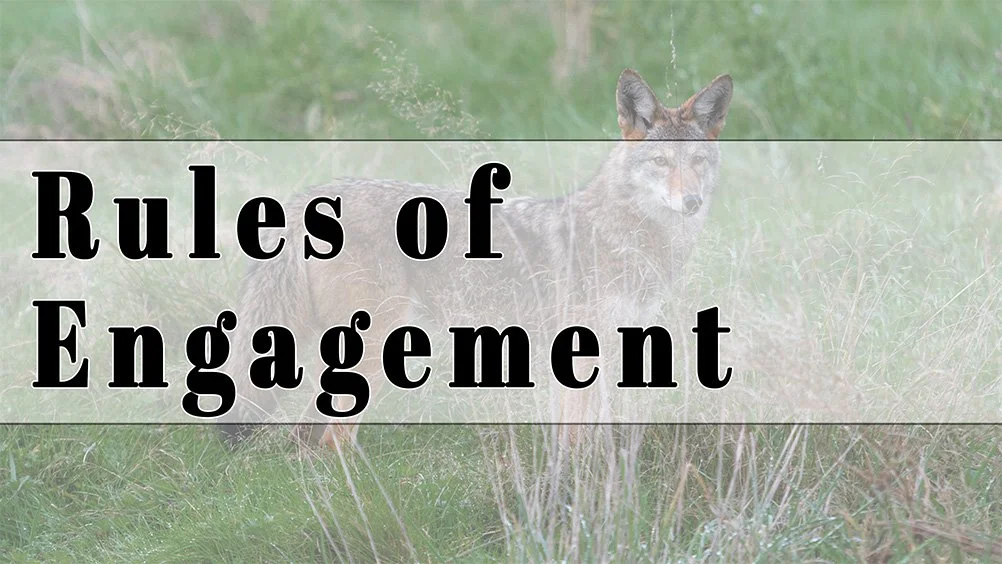
Rules of Engagement
It was only a .22 rifle, but with the right kind of rifle and the right kind of round, a person could take care of all manner of unfriendly creatures scurrying around a farm.
Rules of Engagement
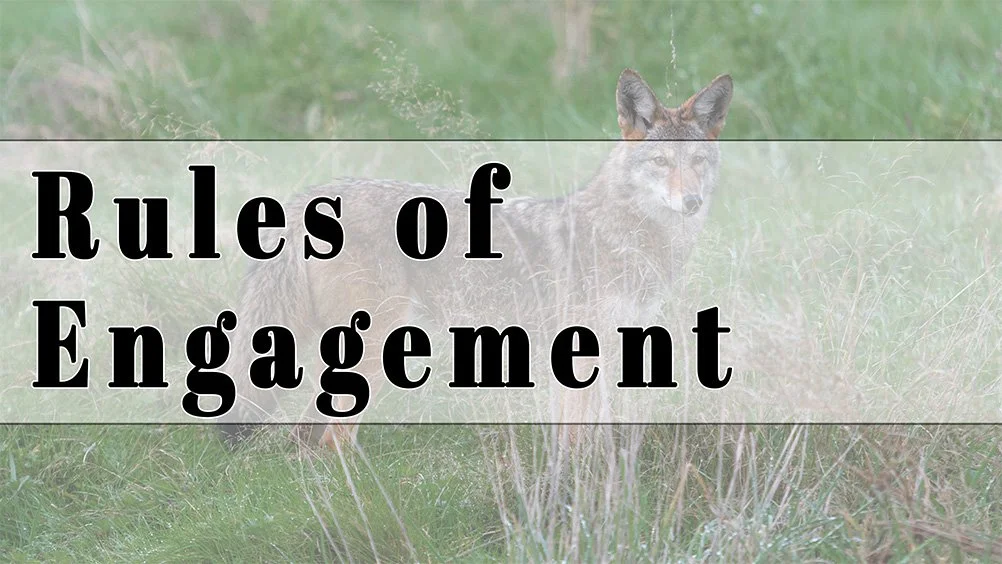
Karl Warren, a former soldier and police officer seeking peace in Idaho, spots a potential threat to his beloved chickens. As anxiety grips him, memories of a deadly police standoff, where he was forced to shoot an armed soldier, surge to the surface.
Will his fear and guilt paralyze him, putting his flock at risk, or can he summon the courage to act?
It was only a .22 rifle, but with the right weapon and the right round, a person could take care of all manner of unfriendly creatures running around a farm.
Though I wasn’t the best shot, with a good scope, any menace within 100 yards or so would be dead or at least know their presence wasn’t welcome. I knew this because my parcel on the outskirts of Westwood was large enough for me to plink away with my varmint gun without a single complaint. Hell, the nearest neighbors, the Powells, were a mile down the road. I used a handful of tree stumps down the way from my barn as my targets, but I’d never dream of harming a living thing unless it was a threat. I had the rifle only to safeguard my girls, my chickens, not to fend off armed invaders.
I’d become more protective of these girls than I ever thought I could be. Though I grew up in semi-rural Missouri, I wasn’t a farm kid, and my family raised nothing more than a couple of dogs over the years. Chickens were something my friend Sanchez, the chief of Westwood PD, foisted on me. Even though they had a rooster, Big Red, as their sovereign, they were MY girls, and they became stand-ins for all the people I couldn’t save while on the job. I even named a few of them as such.
There was Cassandra, a tiny white bantam named after a little girl who thought the pain of life was too great to bear, so she ended it herself. I had a vibrant and loud Rhode Island Red named Mandy, after a vibrant and loud restaurant server. A stalker killed her, a stalker no one, us cops included, took seriously until it was too late. Swimmer was an odd-looking mixed breed with a crooked leg. She was named after a young guy whose swim team teammates bullied him so relentlessly because of his physical imperfections that he thought it best to steal his stepfather’s gun and kill himself. I got to help clean up that mess. I can’t change the past — but I can do what I can to save my chickens. So far, I’ve done a better job of protecting them than humans.
My time is open, and my responsibilities are few. I wake, drink cheap coffee on my porch, work to rehabilitate my twenty acres from a hay field back into a prairie, and tend to my flock. Since leaving the department, that’s been my life — that and some drinking.
The danger is different here. I don’t have bullies, stalkers, addicts, or pedophiles. I have crows, hawks, barn cats, and the worst of them all: coyotes. So far, I’ve been lucky not to lose a bird, but the threat has always been there.
Big Red knew there was danger around. Maybe he saw him, maybe he smelled him — if chickens do that. The big fella, also a Rhode Island Red, did what he was supposed to do. He alerted all the girls, who were straying a little too far afield, and started corralling them back toward the barn.
I was lucky to be outside in the garden, so I saw and heard him react. Since we’ve been having these scares, I've kept my .22 close at hand, outside with me, so I can grab it when I need it. I reached for it and took aim. I scanned the woods for a few moments but saw nothing.
I moved from the never-used goat pen back to the coop door. A group of the smaller bantam hens let out nervous clucks and started flitting through the wooden coop door, even though it was an hour before it was time for them to be corralled into their pen. Big Red was in the field with about ten of the girls, on watch as always, but they were twenty yards from the wood line. He tried to herd them back toward the barn. The long grasses and shrubs had built up near the woods, and I always worried when my flock wandered close.
The area was home to rabbits and opossums, but I knew it also provided cover for feral cats and coyotes. I regretted not burning the entire strip of brush between my field and the neighbor’s. It gave the predators a place to hide and blocked my clear field of fire.
Why didn’t I just go over and scare off whatever was out there? Why couldn’t I make enough human noise and leave enough scent by peeing to warn any four-legged trespasser that this was unsafe land for their kind? Why didn’t I do more than wait to kill something? Watching through the scope made the scene feel unreal, like a video I could observe without emotion or investment.
I may not be the best shot in the world, but at this distance, about 50 yards, with a firm firing position, I’d have great odds of hitting what I aimed at. I was standing, with my left hand leaning on a fence post and my rifle stock resting on my left thumb. Since I only had about a ten-yard-wide strip of wood to cover, the lateral range was nothing.
The girls in the field returned to pecking and scratching among the grasses and late-summer wildflowers, but Big Red remained alert. He knew something was up and that something was in the woods. Through the scope, I could see the signs of his distress: the extra upright tilt of his head, his quick head movements, and a firm gaze. I wanted to ask him why he didn’t just hurry the girls back home, but I was too busy watching and waiting to see what might happen next. Did I want something bad to happen? Or was I afraid to pull the trigger again?

The Stone Harvest - available in print or eBook
He was a mechanized infantryman. Never one of my favorites to begin with, but that’s my prejudice. This particular soldier was apparently a serial abuser, though we didn’t know his history at the time. We knew only that he was drunk, had a gun, and had his wife. I wasn’t on patrol, but they dispatched me to assist because I was on duty, nearby, working an investigation, and armed.
I was the first responder to their home and cocked it up pretty badly. I came in too hot, made too many demands on the guy, and made a mess of an already tense situation. Maybe I could have backed out and waited for the special response team, but with the wife present and in danger, I couldn’t just leave. I committed myself. The patrol supervisor arrived next on the scene and helped de-escalate as best he could, but the soldier was a fucking mess, out of his mind with alcohol and anger. We were in a no-bullshit showdown.
The wheatgrass and sagebrush moved as if something other than the wind were at work. I adjusted my aim and waited. Though I didn’t see the creature, I assumed it was a coyote. I could imagine its brown, black, and gray fur bunching up, ready to pounce on one of my girls. Whichever one it went after, Big Red would probably throw himself at the wild dog and make himself a target. That’s how “chicken” chickens are. They’re far braver than that slander suggests. The wind blew my memories back to the past.
One could say things had escalated poorly. Sergeant Davis kept talking to the infantryman in a casual-as-one-can-be voice, even as the soldier waved a pistol. Davis kept his hands in front of him so anyone could see he wasn’t holding anything. His job was to communicate with the guy. My job was to cover him. I was twelve feet away, with a good angle. I thought he should have drawn his weapon, but he was senior to me. What did I know?
His name was Corporal Jeffrey Pennington, and there was no calming him down. Sergeant Davis would get the man’s ravings under control for a brief moment or two, but then his demons would swirl with the booze and give him another reason to be angry and hateful toward the world. I waited, weapon at the ready. He waved his pistol around and held onto his wife’s belt, keeping her between us. Though I had a clean shot now and then, he hadn’t yet pointed his weapon at any of us. He talked a good game, but our limitations were clear: we can’t shoot unless there is imminent danger. There wasn’t yet. Just a lot of anger, alcohol, and a gun being waved around.
The grass and brush provided excellent concealment, but I could still shoot through them if I wanted. I could only see his back, but I had a good enough sense of where his head and heart would be that I felt I could shoot and take him out — but he hadn’t pointed the gun yet. He was just waiting and watching, weighing the odds of rushing into the field.
Maybe he had picked up a human scent. Maybe it was too early and too bright. Maybe he knew the chickens could put up a fight he wasn’t prepared for. Maybe, maybe, maybe. It didn’t matter. He wasn’t violating the rules of engagement yet. He just sat there in the brush and the grass, sniffing the air, weighing the odds.
Maybe Pennington weighed the odds, too. Maybe he thought he could lash out with his anger and his gun and still be victorious. Maybe he thought he could kill his wife, and then we would solve his problem for him by killing him. Maybe, maybe, maybe.
The coyote sank a little, and its rear end hiked up as if preparing for a rush. In the field, Big Red upped his game, squawking more and flapping his wings. The hens took heed and scrambled back home, more out of fear of Big Red than anything else.
“Fuck you and fuck her!” Pennington screamed at Davis. “My life is fucked! You can’t help me.”
We both noticed that Pennington was escalating and that his gun was moving closer to his wife’s head. Davis’s pleading had become just noise to the drunk soldier, and we both knew time was short. Davis didn’t drop his hands, but with the hand closer to me, his left, he curled his last three fingers, leaving only the thumb and forefinger, forming a pistol. We all knew this sign as a “go” sign, and it was the last thing I wanted to see. It meant I was free to shoot whenever I had a clear line of sight.
I never killed animals when I was younger. We weren’t a hunting or fishing family. I might have killed ants, cockroaches, and flies around the house as a kid, but I wasn’t one to pull butterflies’ wings off or swat at bees. Mother instilled this in me. She saved all her pent-up compassion for others and, despite the self-harm in her last few years, never killed spiders or bugs that wandered into our seemingly respectable home. Instead, she trapped and released them outside. I recall my brothers, before their untimely deaths, trapping and torturing a house mouse. When Mother found out, she raised holy hell for a week. Had Father been around, she’d have left it to him, but she had to handle discipline herself — so no video games for a week, though, of course, she relented after a few days.
The punishment, or at least the threat of it, worked, but what carried more weight was her delight every time she saw a butterfly or a moth. She marveled at them. For bees, she said, those clunky bugs had no business flying their fat bodies on such delicate, tiny wings. Every year at the state fair in Sedalia, she would drag me around to every animal in the exhibits — chickens, rabbits, and goats especially — and tell me everything she knew from her childhood as a 4-H kid. It wasn’t just the stick of punishment but the carrot of her love and amazement with these creatures, too. Her appreciation became infectious, and I never intentionally harmed any animal — even humans.
I couldn’t see the coyote’s head anymore; only its back and tail were twitching. It must have been doing that little dance that dogs and cats do before they attack. I should have shot.
Its tail twitched again, then stilled. Even in the waning light of the golden hour, I could see it through the scope. I could still have dropped the weapon and run out there, making noise, whooping and hollering. Instead, I waited, looking through the scope, finger on the trigger. Davis wasn’t there to give me the signal. I had to make the call.
I took my shot. The recoil from my service weapon, a Beretta 9mm, was minimal, allowing me to send one more round at Pennington’s head before he separated from his wife and collapsed. I expected a scream from the wife, but she stayed put until Davis pulled her toward him, all without a sound. My training activated, and I stepped in to kick the pistol away from his lifeless body.
I pushed the smell of blood from my mind, exhaled, and slowly squeezed the trigger. The crack of the rifle echoed off the low clouds and the nearby mountains. Big Red and the gang barely flinched, but I couldn’t see the wild dog’s tail. Did I get him? Was he lying in a heap, bleeding out, thinking of his family? Did I kill it outright, and was its breath and warmth leaving it as I stood here?
The chickens parted from my path as I made my way through the tall grass toward the treeline and hedgerows, where my bullet had gone. The wild roses had withered, but the ninebark grew full and flush, plenty of space for a varmint to hide and to cover his escape. No blood splatters. No nothing. He had vanished unseen. I’d need to be satisfied that he’d gotten the scare of his life, or so I told myself. At least by not killing him, I might rest a little easier tonight, easier than that night many years ago.

Live Feed
What happens when the past catches up with you?
What happens when the past catches up with you?
The microphone was inches from Barry Gill’s face. He adjusted his backwards baseball cap more out of agitation than for comfort and leaned into the mic with all the serious intensity he could muster. Only five minutes into his show, he was already on a roll.
“Look around D.C. now, and you know what you won’t see? You won’t see any gangbangers roaming the streets looking for some poor soul to prey on. They’re all locked up, running scared, or holed up, waiting for the troops to leave. In D.C., you also won’t see immigrant killers looking for their next victims, waiting to see who they’ll rob next. What do you guys think? You all saw what just happened in California a few days ago, where that young woman was murdered by that thug? If we had troops in Oakland, I guarantee that wouldn’t have happened then.”
He mostly kept his eyes locked on the camera lens to maintain a connection with his viewers for dramatic effect, but occasionally glanced over to the screen that showed the feed of his YouTube Live viewers' comments.
Somebody gotta say it!
100% 100% 100% 100%
Just get rid of them!
Most of the names of the viewers were fake handles to hide behind when the users spewed their filth, but a few used their real names proudly to express their hate: FatNinja, BigBad John 69, Shittin Kitten, or Eric Kaufman. They chimed in faster than Gill could respond.
“The Death Troll says that liberal policies got us here, and I agree. Cary from Texas says that Biden let in twenty million illegals. You got that right, my friend. That swarm is responsible for much of the mess we’re in. I say that if we’re gonna get out of the hole that last guy got us into, we’re gonna have to wade through a lot of shit for a while. That’s what our new president is doing now to clean up our streets.”
Amen brother!!!!!
FK those guys
Gill had been hosting these “Lives” for over a year now, and he’d found his niche. What started as a channel to discuss film from a man’s perspective had morphed into something more pointed. He’d begun just wanting to talk about how men are represented negatively in current film and television culture, but he noticed that his most-watched episodes were the ones that contained elements of racial bias or what he viewed as forced diversity. The heat and wild comments he generated on those videos and discussions brought him more subscribers, viewers, and eventually, revenue, than those simply about media. Bolstered by seeing the numbers and direction of the channel, Gill added more social and political content to his repertoire, and his viewership began to climb exponentially. He had found his niche in angry white men.
The live broadcast ended after another thirty-five minutes of hate and bile directed at brown people, black people, poor people, and anyone else who happened to come up as easy targets for the night’s overall topic. The episode was titled Minority on White Crime Epidemic EXPOSED After Oakland Murder | Trump Calls for 'DEATH PENALTY' so there was plenty of filth to go around for everyone. Gill sat, chin in hand, for a few minutes in his expensive desk chair, elbows on the desktop, and clicked away to review the night’s analytics, checking to see not just the overall numbers but also interested in a state-by-state breakdown. He wanted to get his numbers up in the blue states, Canada, and Europe. The red states were easy pickings, he thought, but he wanted to make inroads with his viewership in those tougher markets. He knew there were more of his target audience there. That's how he was going to grow. In a moment of self-doubt, he wondered how he would be able to maintain the high volume of content to keep these people satisfied and to keep the money rolling in. He just had to think back to the amount of hate in his comment section to remind himself that the world was full of people waiting, yearning to let their grievances be aired.
Satisfied with the modest but growing numbers and happy with the $578 in the tip jar for the night and the three shirts he sold from his merch store, he used an app on his phone to adjust the lights in his Spokane “studio” and stayed in his expensive chair, bathed in the one purple light that he left on. Then, with his phone, he scrolled. And scrolled. And scrolled. He sat soaking up more dopamine and hate by scrolling and clicking through Reddit, 4chan, and other popular sites to find angry, disaffected young men and what they were mad about. He was beyond being gullible like the young men he was looking for, at least he thought he was. At 35, he felt he was beyond being manipulated or coerced, and he hoped to find younger, more receptive minds to mold or preach to. So far, his marketing plan seemed to be working: finding these hotspots on the internet where young men gather and complain, using a fake name to drop a couple of links to his videos, and waiting for new viewers to arrive. It’s just one of the things Gill had been doing to get new viewers, but it was effective.
The next night’s live show was on a new topic, but it was really more of the same. The episode was titled How Fatherlessness Created a Generation of Criminals | Spitting Hard Facts.
“I know a lot about this topic,” Gill said softly into the microphone and camera, striking a gentler tone than usual. “I grew up without a father around, and I may have gotten a little crazy. My mother must have had shit fits over me in my teen years. I ran with a few tough kids, and I had a mouth on me, but I never came close to doing what we see some of these animals in the streets are doing.” He paused for dramatic effect but continued in his softer tone. “But then, by the grace of God, I pulled myself out of that tailspin and pulled my head out of my backside. I joined the Marines right after high school and never looked back.” His tone started to rise with intensity. “Now, though, look at these other dregs that haven’t been graced by God or have the sense to pull themselves out. They’re gunning down store clerks and selling drugs whenever and wherever they want. They don’t have fathers at home to teach them right, and their welfare mothers are probably too strung out to do anything about it either.” His voice was sharp, and he looked straight at the camera, daring anyone to disagree with him. “The democrats have done everything possible to defund the police, so we can’t even fight back anymore, and the courts give the thugs so many rights that they can just waltz out of juvey or jail as soon as they walk in. What do you guys think about that? What have you guys seen?”
The comment feed, already active with a few comments from his regulars, lit up even more with viewers adding what they thought the problems or solutions might be.
NO FAULT DIVORCES KILLED THE FAMILY UNIT!!!!
they tells everyone that their victims
Tips were dribbling in at a dollar or five at a time, the usual pace. Then, from an account he’d never seen before came a tip for the amount he’d never received before on a live show: $500. He’d had several Lives where the total adds up to that much. That was rare but not unheard of. No one had ever dropped that much at one time before. If the amount wasn’t enough of a surprise, the username made him freeze: RickyRocket07.
No, he thought to himself, that must just be a coincidence. Despite his self-soothing, he did one of the worst things a live YouTuber could do: he froze for a spell and created dead air. After a long ten seconds of silence and with a shake of his head, he collected himself and began again in a voice less confident than before, but not before the image of a certain young, blonde teen was planted in his mind.
“Friends and patriots, I wanna thank RickyRocket07 for the generous donation to the show. You all know I use those funds to support the channel and causes that are in line with our shared beliefs, so this will go a long way in helping. Thank you, Ricky.”
RickyRocket07 had something to say about this in the chat.
My pleasure. I, too, had a rough time in my late teen years
Again, Gill froze, thinking about the similarities and odds of a coincidence, but gathered himself and spoke directly to Ricky. “I’m sorry to hear that, but it looks like you’ve recovered well and are doing OK for yourself.”
Yes. Much better now, but it was rough. Maybe I’ll tell your viewers about it sometime.
It was only through practice and repetition that Gill could hold his gaze into the camera. What he really wanted to do was to shut it all down, dim his lights, have a stiff drink, and sit in silence for a while to figure out what was going on. That had to wait; he still had more of the show to do. Now, though, he was without the steam and bile he had built up before the donation and the disturbing input from his guest. He shifted in his seat, took an extra moment to gather his thoughts back to the topic of kids without fathers at home, and started in again with a tangent about how social programs coddle society and that more young men should be compelled to join the military.
After another twenty-five minutes of screed, he ended his show with his usual reminders to his viewers to go check out his Patreon account, where patrons can get special behind-the-scenes access to him and can see content not found elsewhere. Within seconds of logging off, instead of his usual check of analytics and tip jar totals, he sat upright in his chair, turned his cap around, looked at the profile page of RickyRocket07, and found it to be mostly blank. Mostly. There were no profile or banner photos, and no information other than the user's hometown. It was listed as Rathdrum, Idaho. Gill knew the town well. He grew up in nearby Coeur d’Alene, and Rathdrum was where .... he didn’t want to finish the thought, but he couldn’t help himself. Images of Ricky Rocket came to mind.
Gill got up from his chair and grabbed a beer from his refrigerator, opened it, and drank half of it in one go. He had a twinge of regret for always drinking Michelob Ultra, always trying to keep calories down to stay fit and lean. Can’t be a fat slob like most of those liberals, he often told himself. Now, though, he wanted something heavier to drink, something stronger. He wanted to get a buzz on like–like he had that night, he recalled in a shock to himself. He had a bottle of bourbon in the cabinet that he kept for special occasions. Was this a special occasion? Would drinking make him forget or make him think about Ricky more?
He finished the rest of his beer in one more swig, grabbed another one, and then went back to his computer chair. Opening a search browser on his computer, he typed in a few keywords to aid his search: rathdrum, 2007, missing, richard lund, murder. Several articles popped up from the two local papers in North Idaho, as well as some older reports from CNN. They had a news crew up there for a short time until they finally found the dead body, and the furor calmed down a little. What all the articles had in common was a photo of Ricky, one that his mother gave to all the news sources. It showed a sweet young man with locks of bouncy blonde hair, smiling at the camera like it was his best friend who had just arrived at a party. His eyes were bright and wide, just like his smile, and his face radiated joy, reflecting his youth and enthusiasm. His face wasn't as joyful when he was finally discovered in the woods a few weeks after his disappearance.
Gill shook his head once and drained the second beer. It had to be a coincidence, he thought. No one knows. No one else was there. Ricky Rocket is dead and buried. He has been for a long fucking time.
Ricky Rocket was a dumb nickname, and Gill knew it even back in high school. Everyone did, but they used it anyway. The short, wiry kid earned it by being a sprinter on the track team and “moving fast” with the girls on the team. Someone said it out loud one day at a track meet in Post Falls when Ricky was just a freshman, and it just stuck. “Go, Ricky Rocket,” they yelled. The second meaning was earned later that season when Ricky was seen trying to make moves on some of the junior and senior girls on the team. By his senior year, his legend in the school established, The Rocket would be dead.
The thought made Gill stir from his torpor and got him moving again. He finally clicked through his analytics, scrolled through the comments on the video, checked his monetization settings to ensure everything was as it should be, and then checked the email account associated with his channel. Littered among the comments from viewers, requests for collaboration, and sponsorship offers was an email from a Gmail account: RickyRocket07. A tingling sensation began in the center of Gill’s chest and radiated outward like a star in all directions. When the tingling numbness reached his fingertips, he clicked the email to open it.
The email contained a photograph and three words. Nothing more. The photo was grainy and poorly lit, and if you didn’t know what you were looking at, it might have been hard to tell exactly what or who was in the photo. Gill knew. Gill knew exactly what and exactly who was in the photo. It showed a truck, a dark truck, sitting somewhere at night. His truck. The only illumination came from either streetlights or lights in a parking lot. The angle of the picture was from the left rear side, showing that the truck was a Ford F150, and there were two occupants. Most of the license plate was visible, and it showed to be an Idaho plate. You couldn’t see the face of the driver, only his outline, but you could clearly see the passenger's side profile. Just as importantly, you could see his bouncy, blonde locks of hair.
The three words were, “You were seen!”
The feeling in his chest intensified and pulsed and generated a heat he’d never felt before as his mind leapt to the many possibilities of how his life just might have turned to shit.
* * *
Half a state away, safely ensconced in a studio apartment above the garage at her parents’ house in Boise, Sara Lund refreshed her browser and saw that she no longer had access to Gill’s YouTube channel. Good, she thought. That meant that he had seen the email and had blocked her account. Donating that $500 hurt financially, but she felt it was a good way to get his attention. Sara wasn’t positive that Gill killed her brother until he blocked her accounts. Until then, she had only suspected it, felt it in her bones. She had gotten to him, and he thought he was safe. The real fun was to begin now.
Despite her years of self-denial and lying to her therapists, regardless of the built-up walls of self-defense she had constructed to keep herself safe from the memories of Ricky’s murder and her negligence, all it took was a mention in the news that a new Shake Meister was going to be opening near her home to release all those years of darkness. It was a breakthrough, a long time in the making, and the clarity for her responsibility in her brother’s end washed over her, wiping away her fears of consequences for her actions, leaving only the long-simmering hatred for the one she now knew in her heart was responsible. Lying dormant under all the years of pain from her brother's death, the failure of her parents to accept that she was still alive, her own long-standing addictions, and her feelings of unworthiness was a little kernel that had been the cause of much of her consternation. Her remembrance of a repressed fact brought about gut-wrenching sobs and a river of tears and snot of a volume she had never before produced. But that released memory, that hidden memory that had been tucked away so long under layers of shame and alcohol and drugs, meant so much to her. She remembered. She was the last person to see her brother before he was killed.
As soon as the clarity hit her, she went right to the basement in her parents’ home, where she’d moved back into after yet another relationship breakup and emotional breakdown. She opened one of her boxes of old things from her youth and found what she was looking for: an old blue Razr phone and charger. After charging it up for a few minutes, it came to life, and she checked the photos. And there it was. The picture she knew would be there. The photo she took on a whim as her brother drove off, leaving her at the Shake Meister in Post Falls to wait for her friends to give her a ride home.
“I'm gonna tell him,” Ricky said to her earlier that night.
“Whatever. I think you’re crazy. Barry’s not like that. He’s not gonna understand. What if mom and dad find out? They’ll freak out,” Sara said back to her older brother.
“Yes, he will. I know he will. Mom and Dad are gonna have to find out soon enough.”
Other than talking about the logistics of her getting home, that was the last conversation they ever had. Sara saw him as he drove off in Gill’s truck, and for no reason that she could ever verbalize, she snapped a quick picture with her phone. She never saw her brother again. His recovered body was so deteriorated that they had a closed-casket funeral. Her brother’s murder and disappearance were still unsolved even after all these years. With this new piece of information, this photo, this memory that she had willingly kept back then, suppressed for so many years, now refreshed, maybe she could get the case reopened.
A wave of guilt and shame washed over her as complicity in never sharing the image with the police at the time or telling them about Ricky’s last ride. She wanted to at the time, but was so worried about letting Ricky’s secret out that she never did. Having her parents know Ricky’s deepest identity, his deepest secret, would have shamed them to no end. They moved away from liberal California to avoid such “evil” impulses. She sat at her desk, head in hand, and replayed the time the deputy asked her if she knew anything at all that might help, and she just said, “No.” The self-loathing washed over her for a full minute before she shook it off. Enough of that, she thought. The blocking of the accounts, Sara felt, was something that only a guilty person would do — and she had a plan for that.
* * *
Gill went live a few minutes later than usual, 9:04 pm Spokane time. He’d gone back and forth about cancelling the whole show, but his need for ego gratification won out, and he started with his regular, confident self.
“What’s up, guys! Sorry for the delay. Had some tech difficulties, but I’m here now. Today, we’re gonna talk about the modern military, how it’s gotten too “woke” and what is being done by the new regime to instill a more killer mentality instead of all this soft shit we see now.”
The live feed comment section, already abuzz with activity, came alive even more.
GO WOKE GO BROKE!!!!
Its not like it was when i was in
“That’s right, DragonDawg. Times have changed. Even since I got out only a few years ago, things have gotten so soft. As you all know, I was a Marine for a bunch of years, and we knew how to kick some ass. Now, the rules of engagement they have to use make sure that they’re always fired upon first. A Marine has to die before we can fire back. That’s what the last administration gave us. That’s what the new guys are trying to fix.”
The comment section, still lively, started to come alive with unusual activity. RickyRocket07_2 posted a hyperlink time and time again. Nothing more. No message or text, just the link. It must have been posted forty or fifty times before Gill noticed it, interspersed between the comments of his viewers.
What the fk is this?
FKN SPAM!
Whos posting this
Gill saw the username and had a good idea what the link went to without even opening it. He right-clicked on the name and blocked them, hoping he had done so before anyone opened the link. Blocking a user removed all of their comments, and Gill noticed that all the links had disappeared. He hoped he was safe.
You guys see that pic? WTF was that about?
Hey, Barry! Who in that truck?
Hoping to cover his own concerns and distract his viewers from the distractions, Gill went back into his diatribe about the “woke” military. “When I was in Iraq, we knew what we had to do and we did it, but just a few years later, when that old man had us tuck tail and run out of Afghanistan, good Marines died because we had gotten too soft under his administration.” However, there was a segment of viewers who weren’t following his lead.
Wasn’t Ricky Rocket the guy that donated $500 yesterday?
Whered they go?
Y’all see what else that site said?
That chilled Gill. He had blocked the user, so he no longer had the link. While half-heartedly keeping up his banter, he wondered what else was on the end of that link. There was the picture he had been sent, he was sure, but what else? He hoped that if it stopped now, everything would just blow over and return to normal. One of his viewers had other ideas.
You gotta check this out!!!!! Gonna be a good show tomorrow. Lolz!!!!
A user named TigerBomb posted the link along with the comment for all viewers to see on the live feed. Gill, entirely forgetting about protocol and the fact that he was live on air, indulged his curiosity and clicked on the link. It went to a YouTube video that, when played, showed a still image that had been sent to him the night before, but in this one, the license plate on the truck was blurred out. The title of the video was WHO KILLED ME, and superimposed over the photo near the top was floating text that gave a date and time for a live broadcast!
"Fuck!” he said aloud for all his viewers to see. “Look, folks, I don’t know what’s going on, but I don’t like my show being hijacked. I’m gonna cut this one short tonight. I’ll see you next time.” He ended his show without his usual outro and end music. After cutting the video feed, he sat still in his chair, thinking of all the possibilities of how this could be hell on him, but he still suffered from the illusion that he could escape the weight of what was happening.
* * *
With the end of Gill’s live broadcast, Sara was just getting started. At her desk, she raised her hand to move aside a lock of curly blonde hair that had fallen in her face. When that only partially succeeded, she blew at it from the corner of her mouth, finishing the job. She had a message prepared and went through every video on Gill’s channel to paste it. It said, “Come find out who Barry Gill killed back in 2007!” and gave a link to a YouTube Live scheduled for 9 pm PST the next night. Not coincidentally, Sara scheduled it for the same time as Gill’s show. After ensuring that all his videos and Shorts conveyed the same message, she visited the SubReddit devoted to Barry Gill’s channel, r/BarryGillLive. She left the same message on several of the posts. Lastly, she did the same to about fifty of the posts on his show’s Facebook page, just to make sure the older crowd saw the message.
“Yeah. Fuck you,” she said out loud to no one when she was all done. Back straight, leaning forward, her elbows resting on the edge of the small folding table she used as her desk, Sara rested her chin in her hands and felt a swell of energy and self-empowerment she hadn’t experienced for years. Going to the police would have been too easy, she thought. She would do that also, but she wanted to make that fucker squirm for a while first. Now, there was nothing to do except wait.
She stood up quickly from her desk, knocking over her empty teacup, and headed over to her red velvet couch. The couch didn’t fit the decor of her current light green room at all. It was from a previous life, from a brief time a few years ago, when she had a modicum of happiness in her life, when she thought she had love. What she had, she realized too late, was the right combination of denial and alcoholism to make her feel like she had enough balance in her life to maintain the appearance of happiness in a co-dependent relationship. The relationship ended, but she salvaged the funky retro couch and an expensive mattress out of it all. That, and material for even more therapy.
Lying down on the soft, plush couch, her goal was to not move a muscle other than to breathe, to let her mind adjust to stillness, and then to work through the details of her presentation the next night. It was a fine goal, but like so many others of hers, it failed. She stayed still, but her mind whirred with thoughts of her many failures concerning her brother’s memory; her failings from that night. She knew there was no way she could have saved her brother, but maybe she could have said something earlier about him going away with Gill in his truck. Maybe that would have done something. Maybe this and maybe that. Her brother was dead, and now she was certain that Gill had something to do with it. She was taking action, and she felt better than she had in many, many years. Despite her desire to fulfill her nightly habit of getting white wine drunk, she didn’t have the urge to blot out the feelings. She wanted to feel things tonight.
* * *
As long as it took Sara to paste all the comments on his various posts and videos, it took Gill three times as long to find and delete them, but that was only after followers had seen them and either liked the comment or made a comment underneath it. There was no way to know how many of his followers had clicked on the link, but looking at the page where the Live was scheduled, he could see that the user, the original RickyRocket07, had grown a following of a few hundred subscribers. Checking back at the video/picture that was posted the previous night, he saw that it had over 5,000 views and more than 100 comments. Scrolling through them, most of them expressed confusion or bewilderment over the meaning of the image, but a few shocked him.
He’s exactly the kind of guy who would do something like this.
These fkn guys!!!! Always with these guys
Had anyone asked him, Gill would have said that it had been years since he’d thought of Ricky Lund, but the truth was that he thought of him in some way every single day. Sometimes it was just a passing thought about his feelings from that night, and other times he recalled each and every second of what had happened with crystal clarity. Tonight, waiting for 9 pm, was one of those times. He remembered their talk. He remembered what Ricky told him. He remembered his disgust and anger, and he remembered pushing Ricky away. He remembered the sound of Ricky’s head hitting the rock, and he remembered all that blood. He remembered all of it. An IMAX movie with full Dolby sound played in his head of his shameful actions afterwards. How he knew no one knew they were parked at an old, abandoned logging road near Rathdrum Mountain. How he buried the body under all those rocks, and how he went back to town like nothing happened.
As the 9 o’clock showtime approached, Gill wanted nothing more than to dive deeply into a bottle of something stronger than Michelob Ultra.
* * *
In the past week, since she discovered that Gill was a YouTuber and her plan became clear, Sara had learned a lot about technology. She taught herself all about the ins and outs of YouTube videos and livestreaming, but more importantly, she looked up all she could about creating deepfake videos using commercially available AI. Those two tech pieces combined to make what Sara hoped would be a powerful tool for her to impart some pain on Barry Gill, perhaps not as much as he deserved, but a little would suffice before the deputies did their duty. She had her prerecorded video ready for the Live session and waited.
At nine, exactly, she went live and hit the play button on her dashboard. Her screen, and those of the 2,377 viewers who were waiting for her, showed a young blonde man standing in a scrubby pine forest, looking serious and waiting to speak. His slightly curly hair was messy, but in an endearing way that highlighted his good looks. After a five-second pause, he began the speech that Sara had generated for him.
“Hi. I’m Ricky Lund, and I’ve been dead since 2007. I died somewhere in the woods outside of Rathdrum, Idaho, and only one person knows exactly how and where it happened. One night, in late 2007, this person and I drove in his truck away from the Shake Meister in Post Falls, and I was never seen alive by anyone else ever again.”
Ricky’s almost realistic self disappeared from the video and was replaced by the still image of the truck. This one didn’t have the license plate blurred out.
“That’s me in the passenger’s seat of that truck, and you’ve probably guessed by now whose truck that is and who that is in the driver’s seat. I’m not alive to tell you what happened after we drove away that night,” Ricky’s avatar held for a few seconds, where Sara wrote in for it to make a dramatic pause, “but that person is. They can tell you all about what happened afterwards. They can tell you what we talked about that night, the secret that I revealed, and all about why they never said anything to the police about our trip that night.”
* * *
Barry Gill watched the video while seated at his desk, keeping an eye on the comments as they rolled in.
Who tf is Ricky Lund?
I’ve found a link to a news article about this. I’ll post it.
Is Gill spposed to have done this? Is that what this is all about
Other viewers started posting old news links to the stories about Ricky’s disappearance and the eventual discovery of his body. Gill squirmed in his seat and felt a trickle of sweat roll down his back. That starburst in his chest was back again.
* * *
Sara watched as AI Ricky finished the speech she had programmed for him, an almost smile on her face.
“An hour ago, an email was sent to the sheriff’s department with a copy of the photo you’ve seen and a statement from the person who took it. In that statement, the person shares more about what I was going to tell the other person that night. That might be the reason this person killed me, but we won’t know until the deputies speak with him.
This is a person many of you know, who many of you follow on this platform. It’s someone who talks an empty talk of bravery and manhood, but was a coward when it counted. I suppose we’ll know more soon enough.”
The video ended and was again replaced by images, this time a series of them depicting the real Ricky Lund at various times in his too-brief life: Ricky as a baby, Ricky dressed as a pumpkin for Halloween, and another of Ricky just after a track race, smiling and waving to someone off-camera. Sara felt the tears welling up, but she fought them back. She didn’t feel that she deserved to cry; she’d done enough of that. She wanted a drink, but she thought she’d done enough of that, too. Instead, she stood up, walked away from her desk, and threw herself face down on the bed she had salvaged from the wreck of her last relationship. It was three days until her next therapy session, and she’d have a lot to talk about.
* * *
His followers, or at least the viewers of the Ricky Rocket video, kept the comment section of the video abuzz, and Gill read them with a sense of dread.
Gill’s a killer?
Oh, damn! Ya know the police are moving right now
Dude better have some answers
The starbursts in his chest didn’t stop now. They came so fast and so powerful that they all ran together in a solid series of pulses, keeping him both stunned and energized. He couldn’t stay motionless anymore. He jolted up from his chair and pushed it back, knocking over the lightstand behind him. This caused a quarter of the room to get darker, but it was the corner he wanted to get away from. He paced the faux-wood flooring and used his foot to shove the coffee table out of his way when he decided that he needed more room to move. A wider path seemed safer, he thought.
“Fuck it!” he said aloud and went into his modest white kitchen to fetch the bottle of bourbon he’d been avoiding the past few nights. The bottle was tucked away in the same cabinet as the Bloody Mary mix, vodka, and tequila. He felt better knowing he had all that to fall back on if the bourbon wasn’t enough. He had another fallback, too. Something more final.
His 9mm sat on the shelf in his closet in a secure case. He had other handguns, but this one, a Beretta, was special. It was the model that he carried back in the Corps. They hadn’t gone to the range together in more than a year, but every once in a while, Gill took it out of its case, stripped it down, used a lint-free cloth to rub it clean, and gave it a tiny bit of oil before putting it back together and working the action a few times. It was a calming, almost hypnotic act that took him back to happier times, to when he felt a purpose in his life, to when he wasn’t just floating around in space, making it all up as he went along. The Marines, even in the dangerous times, maybe especially during those times, gave him direction and a sense of purpose after all the lost feelings for what he did to Ricky. Now, all that was going to come out into the open. Now, questions would be asked. Now, he’d be ruined.
Gill pulled the case down from the shelf, opened it, and pulled out the handgun. He dropped the magazine and cleared it to ensure it wasn't loaded, then reloaded the magazine but didn’t rack a round into the chamber. Instead, he went back out to where his drink was waiting for him on the kitchen counter, grabbed it, then went to his overstuffed chair, his thinking spot, and held his pistol close to him in one hand, drink in the other.
He knew they’d be coming, and soon. The police, or maybe the sheriff’s department. Someone would come. They'd ask questions about that night. His secret would come out.
He heard a car pull up in front of his building and knew who it was. He listened to the car doors opening and then shutting again. Gill had a choice to make.

The Toilet Fairy
When the thing you feared and loathed becomes a dear treasure.
Photo by Peter Herrmann on Unsplash
When the thing you feared and loathed becomes a dear treasure.
It was among the most ridiculous things any of us had ever seen in our lives, yet the damn thing felt like part of the family somehow. She sat upon the upper lid of Gramma Andy’s toilet tank for all the years and all the visits we made to her house in Santa Rosa, staring at us boys as we stood to do our business. Her porcelain face and torso appeared smooth and mostly pristine, the look of an angel, but Lord knows how many men and boys’ private parts she’d seen in her day. She wore a grand variety of colorful, billowing dresses that covered the extra roll of toilet paper underneath, the selection chosen to match whatever color hand towels my grandmother displayed.
From an early time, we were familiar with the doll’s story. Mother had told it to us enough times. It came from Germany with our grandmother in the 1950s when she emigrated here as a young woman. The post-war years proved to be too much for her, and she jumped at the chance to come to a land with so much opportunity. She came with only her dreams, a suitcase, and the Toilet Fairy. Only, it wasn’t the Toilet Fairy back then. Then, it was only half a doll on a stick — a childhood puppet that kept my grandmother company during the dark days of the war and the sometimes darker years that followed. How and when it became the Toilet Fairy was a mystery to us grandchildren, but we knew that the ugly thing had had a colorful life.
After Gramma Andy’s passing, our mother adopted the creature and kept it as a part-joke, part-heirloom in the display cabinet in her well-appointed San Francisco living room. The thing stuck out among her collectibles and other oddities, always catching the attention of visitors. We kids just rolled our eyes whenever someone mentioned it, or we made jokes about how many times it had seen us pee. We hated the thing, but it had always been a part of our lives.
Then, our mother died.
I had already moved to Germany to teach, but also to reconnect with the country and my German heritage. It had always been a void inside me. When my grandmother moved to the U.S., she married an American, adopted a bland last name, gave her children American-sounding first names, and stopped speaking German. Instead of Wolfgang, Claudia, and Lothar speaking German around the house, Robert, Linda, and Thomas spoke American English. In her desire to move forward and assimilate, she left her country and culture behind. My mother continued that pattern of leaning into American-ness, but there was always a whisper of something inside of me that knew there was something more to be learned. Maybe it was the memory of how my grandmother pronounced “w” and “v.” Maybe it was in how she always had a layout of cold cuts, cheese, and bread when guests came over. Or maybe it was that damn Toilet Fairy who carried history and memory like a torch across a foggy field to keep something alive inside of me.
“When it happens, you don’t have to come back over,” my mother said on the phone a few weeks before she passed, “You were just here this summer.”
“Won’t there be a funeral or something?” I said it as if I weren’t speaking to my mother about her own death.
“Like I’ll care. I know you’ll miss me. I don’t give a shit what other people think if you’re not there.” In her illness, my mother had lost some of the refinement from her upbringing. Within the month, she slipped away to join her mother.
My sister Marie had the unpleasant task of dealing with our mother’s possessions. She was both the eldest and the geographically closest. I, the baby, far away chasing yet another dream, was once again shielded from responsibility. Our dead brother was also free of his duties here.
“I want the Toilet Fairy,” I said when asked which of Mom’s things I wanted. “I know just where to put her.” It was an impulsive ask, and I hadn’t thought of it until the instant my sister brought the subject up. Just the mental image of the cursed thing brought to mind the dusty rose color of the tiles in Gramma’s bathroom, the cloying scent of the decorative hand soap, the rough feel of the fairy’s wool dresses, and the little scar on her left ear from where my grandfather had to glue it back after I knocked her off her pedestal trying to peek under her dress when I was five.
“Don’t put it on your toilet lid. You’ll creep out all the men.”
I rented the cottage outside of Darmstadt that I did because, based on an old photo, it looks like the one my grandmother grew up in. It was a white stucco rectangle with a tiled roof and a garden with a half-wall. In another photo from that era, my grandmother, perhaps eleven or twelve years old, sits in a wooden chair near the fireplace, holding the Toilet Fairy as she was before we knew her: a half-doll on a stick. I don’t have a fireplace in my cottage, but I have a wood stove with a shelf above it. That will be the new home for the fairy when she arrives.
Checking the tracking number, the package my sister sent has been at the DHL center for almost two weeks. I can see the Toilet Fairy, with all of her colored dresses, sitting alone in a box, scared and lost somewhere in a warehouse. It’s not the homecoming that I would have chosen for her.

Hex
An unassuming man wishes to remember his life experiences in an unusual way.
The front door opened, triggering the bell, and announcing that drinking down at the pub would have to wait a while longer.
“Fuck,” the artist whispered in the empty back room. “I’ll be right there,” she shouted.
Rubbing her palms against her face to infuse herself with new energy, she thought of the worst possible tattoos that she might be asked to create, lifeless ones that drained her: something cute on a teen girl’s ankle, a tribal band for a frat boy, or a skull for one of the local chuds.
“Fuck,” she whispered again. A vision of a single ice cube melting away in her glass of bourbon filled her with both warmth and sadness; warmth from the escape from the boredom of her life and sadness because she knew that’s all she really had to look forward to most nights. She shook off the negative thoughts and made her way to the front of the shop. The heavy curtain she pushed aside served as a demarcation between where she could relax and where she had to tolerate people. Behind it, in the back room, she could safely wear her moods, whatever they were. Once past it and on the service side, she had to put on her friendlier face.
The man stood patiently, with the look of someone in banking or finance: 50s, lean and fit, clean-cut, bland and conventional in his dress. He hadn’t been in for months, but his presence now meant that something exciting had happened. Inside, her mind leaped and whirred while her body felt a surge of warmth starting at her center and radiating out. For an instant, she thought about how sweet her Jim Beam would taste later at the bar–but it could wait.
“Well, good to see you again. Let’s get to it,” she said with a face and voice that she hoped hid her enthusiasm. With a slight smile, she waved him over to the work chair. “Tell me about it.” She noticed that her voice was slightly higher than normal.
Removing his suit coat and dress shirt, he pulled up the left sleeve of his white undershirt, exposing a grid of hexagonal cells on his upper arm. Several of them were already filled with her previous efforts. The most recent addition, the deer head with Xs for eyes, stood out for its new colors. He sat in the chair and spoke in that deep, slow voice the artist had to admit made her tingle in a way only women usually did.
“This one differed from the others. He was ...,” the man paused and looked out the shop’s front window to find the right words. “He was a disappointment as far as humans go.”
“Yeah? How so?” She saw him tighten his jaw, and she hoped the question wasn’t pressing him, but her excitement made her impatient and curious. He turned his gaze from the window and looked at her directly.
“He was rude to our server when we went for lunch. I didn’t much like him even before that, but that did it for me. He’s like a cartoon of a man. We talked our business, and he went back to the construction site.”
A dozen questions filtered through her mind, but the power of his direct look into her eyes quieted her and let her know that he would only tell her what he wanted, that he would say enough to inspire creativity, not to quench her curiosity.
“I knew he’d be alone there after the work crew left. Hell, he basically told me where to find him himself. I did it and left him right where he could be found as soon as someone comes in again. That won’t be until tomorrow morning.”
“This was just a few hours ago?” the artist asked, leaning forward in her chair. “You’re saying he’s still lying there.”
“Yes. I haven’t heard anything in the news about it yet.”
“That’s fucking hot!” Still leaning forward, she shifted in her seat. “You know they’re gonna want to question you about it.” His lack of response was reproaching enough to put her back into silence.
“What do you think so far?” the man asked after a quiet patch. “What do you see?”
“Well,” the artist started slowly, looking down at her tattoo gun as if that’s where the ideas came from, “we have a man, a cartoon of a man, lunch, construction site. What did he have for lunch? What kind of restaurant was it?”
The man gave a quick smile, perhaps amused by the oddness of the question, or perhaps uncomfortable about having to share a detail. “He had chicken and pasta in a garlic sauce. It was just some diner he said he goes to a lot. Nothing fancy.”
The artist leaned back in the chair and slumped her shoulders. She looked out of the same window the man had, hoping for similar inspiration. When it struck, she leaned forward.
“So,” she said and placed her hands on her knees. “I keep coming back to cartoon, chicken, and something from a construction site. I’m thinking a hammer. That has a nice, clear shape to it. That sound like the highlights to you?” she asked.
“Cartoon, chicken, hammer? Very interesting. Let’s go.”
She leaned forward and rolled up his sleeve a little farther, scrunching it as high on the man’s left shoulder as she could, and exposing more of their previous creations. The field of connected hexagons covered the shoulder and much of the upper arm, twenty-four in all, each one and a half inches wide. Twelve of them were already filled in with previous art: the deer was for the “poacher who hunted without permission”. There was the Big Dipper with a purple and green wash of Northern Lights behind it. It was for the girl from Alaska that he met while up there on a work visit. He never gave a reason why, but he said she was a “disappointment.” The artist had a hundred questions for each of the twelve pieces, none of which would ever be answered.
The man didn’t wince when she put the tattoo gun to his skin. He never did.
Managing
A reminiscence of the summer that I killed my father.
Photo by Matt Roskovec on Unsplash
Managing
One summer, I killed my father. OK, I didn’t actually kill him, but he died, nonetheless. He wasn’t my real father, either, but he felt that way a little bit. I probably could have stopped it from happening, but in my youth and fear, I failed to do the right thing.
The Darmstadter Hof was and still is a local icon. Some would call the granite building a relic, but a family member of ours had owned it and managed it for nearly ninety years. The ‘Hof’ sits snugly in the middle of the town marketplace, and over the years, though the area's fortunes rose and fell with the economy, our place stayed open to welcome travelers. Its Art Deco design went in and out of style, but the patrons always came; some left a lasting impression on me.
I am now the General Manager, but I didn’t start that way. Throughout my school years, I’d work in one menial position or another, finally making my way up the ranks to the gold jacket of the desk crew, a prestigious position in our fine hotel. I started as a busboy in the restaurant for two summers. Then I was a shuttle van driver for two more summers. That was fun because I interacted with people more and got out of the building. Even though most of my driving was just to the airport or seaport and back, getting out to see the city was always an adventure.
Most times, my passengers would engage with others in their party, discussing their trips or business dealings. It was the lone travelers who brought the best conversations to me. I met a few cool people, a lot of chatty types excited about their adventures, and more than one older woman who would have liked to show a younger man an interesting time. At least, that’s what my young man fantasies hoped for.
The first summer I drove, one man in particular caught my interest. He barely spoke to me the first time I transported him from the airport, but he had an almost recognizable air about him. I didn’t notice right away, but as I was loading his luggage, I was soon struck by how he stood, his stance, and the cut of his shoulders. There was something familiar in them. We drove along, and I’d peek at him in the rearview mirror to see his salt and pepper hair as he stared intently out at nothing. Even his button-down shirt and lack of a tie were reminiscent of someone missing from my life. And it finally hit me: my father.
Now, at this point, my father had been gone for eight years. Not dead, just disappeared. He left my mother and me in the mid-‘80s to live his life and hadn’t been in touch since. The man in the van certainly wasn’t my actual father, but his presence, his similarity to my father, stunned me into an uncomfortable silence. I don’t think he minded because he just stared off into the distance and sat quietly the whole ride. At the hotel, I wordlessly unloaded his belongings and was rewarded with a $20 bill, a firm handshake, and a genuine “thank you.” I don’t know why, but I remember feeling like crying.
I saw him again the following summer, but this time, the early morning drive was to the airport. He recognized me from the previous year, said a fond hello, and sat in the van's front seat. He sat quietly for the first ten minutes of the ride, but then he looked at me and told me a story.
“My wife and I used to both come on these trips to the ‘Hof’ for weekends back when we lived in the area. Back when …,” His words trailed off.
“Yeah?” I said. I wasn’t sure where to go with this at the time. I didn’t want to say or ask anything upsetting. “Is she...still with us?” I thought this was a smart and diplomatic question.
“Yes,” was all he said. After a deep breath and a sigh, he continued. “It was for our anniversary weekend, and we thought it was a good way to rekindle some fun or romance or...,” he waved in the air to indicate he couldn’t find the words, “or whatever.” He paused for almost a full minute. I could see he wanted to say something, but he hadn’t found the words or the energy yet. Now that he had been in the van longer, I could smell what must have been last night’s alcohol coming through his pores. I’d driven enough hungover guests to recognize the odor.
“She stopped coming with me a couple years ago.” He let out another sigh. “I wish she would start trying again.”
Arriving at the airport saved me from the awkward situation. Another $20 bill, another firm handshake, and another genuine “thank you” later, he was gone again.
The next time I saw him was the following summer, my first in the gold jacket and on the 4 p.m. to 2 a.m. shift.
He had just left the hotel lounge when he saw me across the lobby. “Hey, kid,” he said a little too loudly for the late hour. “You’re moving up in the world. Gold jacket looks good on you. Who’d you sleep with to get that?” He approached slowly, in slow, smooth, controlled steps, and I could smell the whiskey that had loosened his tongue.
"I worked very hard to get here,” I said a little indignantly. Then, with a little smile, I let the truth slip out. “Well, my mother is the General Manager, too.”
“Oh, shit!” he said, leaning back from the countertop. “I didn’t mean anything by that.” He shooed away invisible flies as if to wave away his faux pas. “Anyways, good for you. You’re probably livin’ the dream, aren’t ya?” He leaned back onto my counter with both hands as if the answer to this question was really important to him.
I didn’t like the question or what it implied. I didn’t like it because I wasn’t livin’ the dream. I was livin’ my mother’s dream: graduate with a BA in Hospitality Management, follow up with a master’s in business administration, work all the positions at the family hotel, and eventually take over for her as the general manager. If I just follow that path, I’ll make her happy. But it wasn’t my dream. I wasn’t sure what my dream was back then.
I lied. “Yes, sir. I’m working towards my professional goals.”
“That’s great, kid. I’m so glad to hear that. I’m proud of ya. I remember you when you were a busser in the restaurant. Now look at you.”
“You saw me back then?” I said, only half believing him. But how else would he know if he hadn’t seen me?
“Sure. I been coming here for years, you know that, and I see what’s what. Now look at you. Well done, young man.” He leaned back from the counter and shot me three times with the finger guns he drew from his side holsters. “Pew! Pew! Pew! Congratulations, bud.” He toddled off to the elevator down the hallway and disappeared.
I’d been seen. This man, who wasn’t my father, saw me. This man, who reminded me of my father, was proud of me. I was profoundly shocked to the edge of tears. My mother, granduncle, and co-workers had expressed pride and pleasure for my promotion, but it wasn’t the same as if my father had done so. This man, this stranger, was the closest thing to it that I could imagine.
It would be another year until I saw him again, the late summer of ‘95. Again, he was coming from the bar, and it was again whiskey that loosened his tongue. He leaned on my counter as if he owned it. “I don’t see a ring. You married? Engaged?”
“No, sir. That’s not in the plans for me just yet.” The truth is I had no romantic options at the time that would make marriage even a remote possibility.
“Good. Don’t rush into that. Once you do, everything changes. Same with having kids.”
I never knew if he had kids. It never came up. He wanted to say more but seemed to be having trouble finding the right words. His mouth would open like he was about to speak, but then it would close. He held his hands in front of him like he was holding an accordion. Still, the words didn’t come, so I helped.
“Has today been a rough day for you?”
He dropped a bombshell on me. “You can say that. I finally left my wife. Or, maybe she kicked me out. I’m not sure.” He gave a little laugh. “She said not to come back from my little pity vacation this year.”
How does one respond to that? Instead of trying to say something wise or comforting, I went with the first thing I could think of. “Yeah?” Wise words, indeed. If the end of his relationship wasn’t enough, he shared some more disturbing information.
“Yeah. Our son disappeared eleven years ago. Fourteen-years-old and he just up and vanished from the neighborhood. We’ve never heard from him since. We’ve been trying to keep our shit together since then, but I just can’t anymore. I can’t be there for her. I can’t stand being without him, and…,” he looked down, avoiding my eyes, “I can’t stand being with me. I can’t stand being me. I guess we’ve both had enough of it all.”
The lobby was silent save for the whirr of the ceiling fans. From the bar, I could hear the staff closing for the night: the clinking of glassware, the shuffle of tables, and the laughter of the employees enjoying the end of their shift. There was nothing to break the silence of the moment except more from the man.
“I want him back so badly. There’s so much I want to say to him. I want to hold him, ya’ know? I want to tell him I love him and that I’m sorry I wasn’t there for him. I just want him back.” He wasn’t crying, but it seemed he was close to it. The alcohol and his demons were doing their work. His left arm leaned on my desk, his eyes were still downcast as if in recollection, and he stayed still in place, as if any movement would scare away all the memories of his son.
This was outside the bounds of any other discussion I’d had before, and at that point in my life, I didn’t know my social obligation in that situation. Part of me wanted to hustle him out of the lobby so no one would come in and get upset by such a conversation, but another part, the part that had been left behind by a father, wanted to hug the man and let him tell me all the things that he wanted to tell his missing son. I love you. I’m proud of you. I’ll always be there for you. Instead, I sat stone quiet as he let his mood pass.
He looked back up at me. “I’m sorry to drop that all on you, kid. I don’t know where it came from. It’s just been a helluva day, ya’ know?”
“I’m sure it has,” I said in a voice softened more from timidity than true compassion. I had no idea how to handle so much weight. Rather than being bold enough to offer the man any words of comfort, I was stunned into silence by what I wanted to hear. I love you. I’m proud of you. I’ll always be there for you—instead, nothing.
After a moment, he collected himself, took a cleansing breath, and straightened out his shirt and coat as if it would wash the sadness from him. He apologized for sharing so much and mumbled a quiet good night to me. I watched him walk down the hallway to the elevators and disappear. A few hours later, he would be dead.
The next evening, I came in to work to hear that the man had passed during the night from an apparent overdose of prescription medication. The loss hit me harder than one would expect, harder than the passing of any other guest. We’ve had guests die before and plenty since then, but it always seemed more of an administrative problem than an emotional one. This was different.
The shift passed with as little human interaction as possible. My behavior was curt yet professional with those who came to the desk, but I wasn’t in the mood to talk in-depth with anyone. There’d been enough of that for a while. I wanted that man to come in again. I wanted to let him talk some more. I wanted to ask him about his son. I wanted to ask him question after question to keep him talking about what weighed him down. I just wanted to see him again, to know that he was ok. But he wouldn’t come in.
All these years later, and many times since then, I’ve thought of that man and my lack of courage, of my selfishness. The man died because I wanted him, my ghost father, to tell me he was proud of me and that he loved me. Instead, in that instance, I was the only person in the world who had the power of life or death over him, and I could have said the words that could have let him live, maybe just for another day, but he would have lived. I should have talked to him and told him that his son knows that his father loves him. It might have made no difference at all, but I’ll never know because I failed.

Deadlined - Prologue
An excerpt from the prologue of my newest release, Deadlined.
Deadlined - Prologue

Deadlined, now available
Jonathan Robert Scotts was going to die tonight. He settled into his comfortable camping spot beneath the eaves of the South Hayward BART station tracks for the last time, his impending death by gunshot coming within minutes. This wasn’t something Jonathan, JR to his friends, had anticipated, but he wasn’t one to live a calendared life. Having lived on the streets for the better part of two years, his social activities didn’t call for much planning.
Luckier than most of his peers, he got a modest disability pension from the VA. It wasn’t much, just enough each month to get drunk a few times before the money ran out. Apart from that, Scotts depended on donations from the churches on Tennyson Road. Sometimes, he dumpster dived behind the markets, but there was often too much competition from his fellow street dwellers for whatever treasures they might contain.
He wanted to be around his family, but he’d burned those bridges. They still lived down the road in Fremont, but they’d grown tired of his bullshit. They’d grown tired of his lies, and they’d grown weary of him stealing from them when he needed some kind of fix. There were only so many times they wanted to retrieve JR from the county lockup.
The day arrived when they no longer came, and he could only manage a ride to Hayward. Then Hayward became home. JR tried downtown around the bus and BART station but found it crowded with too many hardcore drug users. The industrial areas lacked food or booze sources, and the prime foraging spots along Mission Boulevard were already occupied. After a few weeks of exploring and experimenting, he found his way to the Tennyson corridor and made it his home—for what that was worth. Sure, he had to break camp every night, but that didn’t take long, and it was easy to pack with him on the bike he had stolen. He’d never been robbed, the BART police never rousted him, and only the strongest of winds would bother him in the faux cave beneath the tracks.
Tucked away under his blue tarp, sipping the last of his malt liquor, he weighed whether to take a piss now or hold it in through the night. He wanted a better life, and he had a plan for it. He wanted his disabilities reevaluated to see if he was eligible for a better pension. He’d qualify for VA medical care if he had a high enough rating. If he could do that, he would get to rehab. With rehab, JR almost teared up at the thought that he might get his family back.
He’d fucked up so much, so many times. He knew his family would never forgive him, but he’d wanted to try. He had no idea how to get sober and had every excuse and opportunity to keep drinking as things were now.
Sleep approached as he thought of his ex-wife, Debra. She hadn’t remarried, so maybe he had a chance. He recalled their first dates, how they met, how they kissed and made love. It made him sad. He turned in his blanket to face the concrete wall, took a heavy breath, and eventually slipped into slumber.
JR wasn’t aware how much time had passed, but he woke with a jolt when his tarp and blanket were jerked away. Was he being robbed? For a moment, he felt relieved, knowing he had nothing to steal.
That comfort ended with two quick spits of light from the gun barrel pointed at him. For the briefest of instances, images of Debra passed through his mind before the final shot entered his brain, and he slipped to the other side.
* * *

Start at the beginning with The Stone Harvest.
Oscar Braga looked forward to the killing on this night. It was an idea a long time coming, and that time was now.
While traversing this busy corridor commuting to and from work sites, he had seen the patterns of people in this area and kept mental notes on their activities. He’d seen where the homeless gathered, where they hid and nested. A few weeks back, he’d parked his truck and scouted this area to get a more intimate feel for which dark corners held his targets. He had found the alleys and corners that gave shelter to those he despised.
Tonight, he would clean the streets and make a better world for those remaining, he thought solemnly.
Tennyson Road ran east-west and crossed Hayward just south of downtown. Lower-middle-class neighborhoods saddled its length up and down with a few strip malls, churches, and schools thrown in. Once gentrification took hold, the area’s glory days were behind it and, if lucky, ahead of it. For now, though, it had more than its share of homeless souls seeking refuge from the world’s economic woes where and when and how they could.
The South Hayward Bay Area Rapid Transit station was the site of his first planned contact. Braga didn’t know if it was a male or female, only that this silhouetted figure would be in its usual spot, as it had been every time he’d checked in the past few weeks.
Braga had been keeping himself calm during the roundabout walk from his truck to this starting point, but knowing he was about to commence his wave of cleansing, he was both scared and excited beyond words. His breathing was quick, and his heart rate elevated like he was about to begin a trip on a rollercoaster. But he was ready.
He walked westward along the north side of Tennyson, dipping low to avoid the BART tracks in a half-underpass. Braga shone his flashlight into the eaves of the underpass to check for anyone unaccounted for. Had there been occupants in that dry area, he’d have to skip this first kill, but he already knew from his weeks of prep work that no one had taken up shelter there. Braga wanted a clean start with no potential witnesses. At other spots, he’d easily be able to kill any witnesses, but not at the beginning. Too open, too busy with traffic, too well-lit.
Head on a swivel, he reminded himself while keeping one of the massive concrete support pillars between him and his target. One flickering light cast his shadow intermittently upon the stone. It was a short path and worth the risk. Traffic was clear.
Once on the other side, he steeled himself, pulling a suppressed 9mm pistol out from the front pouch of his black hoodie. It was an old military surplus Beretta 9mm and probably had a few thousand rounds sent through its barrel—maybe even a few in anger. It would work for tonight’s mission.
With one final glance over his shoulder to the street behind, Braga turned and hustled up the concrete incline toward the eave, where it met the underside of the BART track overpass. There it was, in the same spot it had been every time. Tonight was its last night of being a drain on society. Reaching his target, Braga seized the edge of the tarp and blanket the person had used for protection from the world and whipped them away, rousing him with a start. It was a man, after all. Before the man made a sound and while staring into his rheumy eyes, Braga overcame the rapid rise of the man’s stench and placed three quick rounds into him: two in the chest and one in his face. No time to enjoy the victory. He had more to do.
Three blocks west, someone had made a home of tarps against the tall noise-abatement wall, partially protecting the adjacent neighborhood from the sounds of passing trains. The wall kept him safe from the elements but not from predators.
Braga grabbed the tarp that served as the man’s home and ripped it away. Held in place by ropes and bungee cords, it didn’t get torn down altogether, but it did expose the alarmed occupant to the cool Hayward night.
The man’s panic didn’t last long. Two quick shots to his chest, with another well-aimed shot to his forehead, ended any possible emotion or commotion.
Braga crossed over Tennyson again to a small camp in the shadow of overgrown oleanders near the corner of the recently refurbished strip mall two blocks west. There were the usual businesses, all closed: a laundromat, bar, liquor store, taqueria, check cashing store, and a doughnut shop—minimal illumination at this hour.
As soon as the lights from a passing van faded, Braga used the noise to cover his movements as he headed toward the far side of the lot and oleanders. Walking a slow arc to avoid making a straight line to the bushes, he noticed movement to his far right while focusing on his target area. A man shuffled toward him. No, not toward him, but in the direction of the shade and shadow and safety of the overgrown plants. The approaching man carried a bundle, probably sleeping gear he’d stolen.
Braga took a chance to see if anyone inside was sleeping. He looked around in the gloom while adjusting his eyes to the darkness. Two, no, three people were sleeping in their blanket cocoons. The suppressed 9mm had nine rounds remaining, ready to go in Braga’s grip.
The homeless man with his belongings stepped between two overgrown oleanders. As the shadows of the heavy branches embraced him, blocking the light, Braga welcomed him with two quick shots to the chest. Only one of the three vagrants inside the impromptu camping spot stirred from the muffled gunshots. Though they were in the shadows, Braga saw his dark Central American features and greeted the man’s shocked appearance by placing two rounds into his forehead. Neither other camper stirred.
Five rounds left. He put one into each man’s heart and followed it with another into where their heads would be. He gave the second man an extra round in his skull just for fun.
Motionless and silent, he absorbed all the sights, scents, or sensations from the scene: spent propellant from the multiple rounds, the metallic tinge of blood, human filth of the routinely homeless, the wash of noise from the rare passing car, and a distant train. Nothing close that would present a threat.
He reloaded his pistol and surveyed his latest kills for signs of life, satisfied they were all ex-homeless and would no longer be a burden on society. As at the other scene he left his spent shell casings behind. He had stolen all the ammo, making it untraceable to him, and wiped down each round before loading it into the magazine—no chance of leaving a print behind.
The next kill site was two blocks west on the other side of the street. An auto repair shop sat on the opposite corner from a brightly lit 7-Eleven, its lights a blanket of hope and a sense of security for those ensconced inside for the time it took to buy a late-night pack of cigarettes or a Slurpee.
Braga walked to the kill site, the shadowed side lot of the shop, and played this stop differently, knowing he had a full magazine. He quickly placed two rounds in the chest of each of the three sleeping victims he knew frequented the place, short Latino men who appeared to be in their forties. Then, taking a few more seconds, he put a final round in each skull.
He had no more attacks planned out. His truck waited a few blocks away, and if the night’s killing ended here, he’d be okay with the body count. Nine. About as he expected. Naturally, he wanted more, but prudence demanded he take precautions. If he really wanted, more targets could be found in the dark alleyways behind nearby businesses or tucked under bushes at parks. He’d learned in his many trips up and down Tennyson that no matter the hour, there were always stragglers lurking about in the landscaped to add to the count. The fat one without shoes who often stopped traffic by walking right into the middle of the street, regardless of how busy it was. There was also the gal who slept in front of the Mexican market and changed her clothes on the sidewalk. He also knew of an old man who pushed his two shopping carts up and down Tennyson and made his home wherever he felt like it.
There was always more.
Between here and his truck, the most likely spots to find prey were behind the Life Church community center, outside the 24-hour Jack in the Box, or near the park library, but they all looked too busy. Braga knew already, but he triple-checked his ammo count. Loaded with a new magazine and two more ready, he had one other quiet spot to check.
Ruus River was the local name for the cement creek that ran perpendicular to Tennyson. It was part of the city’s rainfall-runoff abatement that gathered all the rainwater from the Tennyson Basin. It brought the water to the shoreline during the rare storms that dumped so much rain and runoff that the regular drains and gutters couldn’t handle it. During the drier seasons, like now, the river served as a pathway for those trying to stay out of the streetlights. The county fenced off the area where Tennyson and the river met, but the chain link fencing wasn’t enough to stop the natural flow of humans on this primate game trail. Braga found a place where someone had cut through to make a path. There’d been no rain, so the concrete river was dry except for a bare trickle down the center of the channel. The tunnels under the road proved too dark to see anything, but the stench of human filth was thick. He gave his eyes a moment to adapt, then noticed a motionless human silhouette at the far side of the street leaning against a pillar.
Braga made an arc around and behind the man, walking past the target with about ten feet between them, making side glances in his peripheral vision. He couldn’t tell if the homeless man was asleep or unconscious. Odd. He was more than sleeping.
He’d seen this man several times shuffling up and down the street, wrapped in his old blanket, looking as bad as he smelled. Probably smelled worse than that fucking donkey, Braga thought. Whatever alcohol or drugs he had gotten hold of had incapacitated him enough that no matter what noise Braga made, he wouldn’t have roused. This wouldn’t be a killing. It would be euthanization. This pathetic piece of shit needs to be put out of its misery, out of our misery.
He changed his mind about how he wanted this kill to play out and slipped his Beretta away. He pulled out the five-inch lock blade from the rear pocket of his pants and used his thumb to bring the blade into position. Smooth is fast, and fast is smooth.
Taking a quick step toward the target, he dropped to one knee, clasped a gloved hand over the homeless man’s mouth, and slid the blade with ease directly into his eye, dead center of the socket. The man’s body convulsed violently, his upper torso lurching toward Braga before flopping into stillness. He kept the pressure on the knife until the man’s body relaxed completely and then pulled it free, not bothering to check for a pulse, but he didn’t get up immediately.
Braga wiped the bulk of the gore from the blade onto the homeless man’s blanket and stood. He was concerned there may be blood on his face or hoodie, but there was nothing much more for that than a quick, cursory wipe with his sleeve. He retraced his steps back to the cut in the fence to see if anything was different, any new people, or maybe someone not there who was before. No. All looked smooth and clear.
Passing back through the fence, he noticed a slight uptick in traffic, which meant more eyeballs on him, but mostly it meant more noise and movement in which to remain concealed. Several parking spaces were empty on the side street where he parked. A few locals headed out to work, he assumed.
On his walk, he pulled out his cell phone and turned on the camera to check for any splatters on his face. There were none, but there was some blood near the right cuff of his hoodie. He’d have to get rid of it, but that’s why he bought cheap ones.
Approaching his truck, he unlocked the passenger side with the fob he had secreted inside the wheel well and got to work. He removed his hoodie, placing it along with his pistol, gloves, shoes, and knife inside a plastic bag. He put his regular sneakers back on. Next, he pulled a package of baby wipes from the glove box, then cleaned his face and hands. Those dirty wipes went into the plastic bag, too. He brought out a small bottle of hand sanitizer, the kind with a substantial alcohol percentage. If he missed any blood, the sanitizer would destroy any DNA value it held. Lastly, he switched out of his “work” shoes, stuffing them in the bag, too.
Braga gave himself a final visual inspection before climbing into the driver’s seat, feeling good about his appearance. He pulled from his spot, headed northward along smaller streets, and reviewed his after-action checklist. Moreso, he thought about the drain on society caused by his ten victims and the incalculable gain to the community because of their deaths. No one gave out medals for this sort of thing—but he felt they ought to.

Seaworthy
Alone in a leaky boat with a mile left to go, the sea takes on a life all its own

Seaworthy
The sea boiled with millions of little silvery fish darting and dashing whichever way their hivemind commanded. In one moment, they’d head towards the rocky shore. In the next, they’d head away from it. The school would dive and right away they’d change course and rush the surface, rippling the grey-green water and creating a great tinkle of splashing. Others quickly took notice.
One by one, the gulls came until the angry sky above the herring swarmed with them. Again and again, they would throw themselves like lawn darts into the sea, disappear for a few seconds, then return to the surface with a mouthful of fish. Sometimes they would fly off to savor their prize. Sometimes they would eat their catch while floating on the water. Sometimes they would fly onto the gunwale of my dinghy to eat their prize.
Taking on so much water from the rain and the waves, I was terrified I wouldn’t make the shore. My trawler was already under; its flotsam being kicked about by the rough water of Dixon’s Entrance. The decision to abandon ship was an easy one. There was no way I could put out the fire that had spread from the engine compartment. My old boat was a goner, and the only way out was over and away. Unfortunately, the dinghy, which no one had used or even inspected for years, was older than the trawler. Now, with a storm rising, I was in the middle of the choppy sound, a mile from land in a waterlogged craft that might only have half a mile of life in it. On shore, the Sitka spruce, poplar, and hemlock patiently stood, not caring if I made it to them or not. Part of me didn’t care either. I was so mad at myself for letting the engine overheat. The fire was my own damn fault. My negligence.
“Mine! Mine!” the gulls yelled as they circled the school of herring. Their black and white feathers stood out from the dark, mottled clouds only because of their flapping. A bold fellow, an enormous male, stood proudly on the prow of my tiny boat, oblivious to me and my angry, desperate rowing. Perhaps he had already eaten his fill, but I’ve never seen a gull stop eating when food is available.
Back in the sea, more silver slashed through the water, but bigger this time. A two-foot-long arrow shot through the school, separating it into two parts. Another silver missile came and separated it yet again. The three schools reformed into one, and the herring waited for the next attack. When it came, it came from below. A coho salmon rose from the water, mouth agape, pushing a small group of herring with it. The tiny fish that didn’t go into the salmon’s mouth fell back safely into the chilly water.
More salmon came. More salmon jumped and rushed and dove at the herring. The school of little fish divided and rejoined time and time again, splitting for safety then coming back together for the same reason. The salmon devoured hundreds of them. Thousands, perhaps. The dozens of salmon were feasting with ardor and gusto—until they weren’t.
One salmon froze mid-attack, paused in space, looked around, and darted off in a seemingly random direction. From under my dinghy, a harbor seal with its dotted grey coat shot out towards the school of herring. It ignored the smaller fish and went after some salmon that were in the middle of their own attack. The seal must have gotten one on the pass because it rose halfway out of the water with the big silver fish in its jaws before diving into the deep with its catch. More seals joined the fray, swimming and skipping through and along the water in pursuit of a meal. The first seal reappeared with less of the salmon than when it first went under, modest rivers of blood dripping into the salt water. It dove again and reappeared, each time with a smaller piece of salmon in its mouth until the fish was gone.
Available in paperback on Amazon
All the while, I kept working the oars. As fascinating as the show may have been and as worthy of narration from Sir David Attenborough as it was, I still had a leaky craft to deal with and a long way to go across a rough bay before I was safe. My gloveless hands complained in their special way, and my shoulders pinched and moaned with every row. My rain gear kept me dry but restricted movement, making each stroke difficult. It also kept my sweat trapped inside and close to my skin. I was nowhere close to shore, but I was already fantasizing about the fire I was going to build that would get me dry and keep me warm.
An immature bald eagle with its dark head of feathers swooped near me and scuffed the water in a failed attempt to catch one salmon that was swimming away from the seal fracas. That drew my eye to the next layer of calamity. Three orcas expelled their air in the middle distance, halfway between me and the site where my trawler went down. One of them, a massive beast, had the bent-over dorsal fin of an elder, probably having swum this bay and sound for decades. It probably knew every curve and contour of the shoreline and every inch of the depths and was teaching its younger companions the same.
In their rabid hunt for salmon, the seals seemed initially oblivious to the orcas, but when the big white and black killers came within 100 feet, they couldn’t help but notice them. Several scattered and fled right away. A few stayed to take an appraisal of what was happening. The seals would plunge down and swim around, then pop to the surface to check where the orcas’ fins were. They’d dive when the orcas did and stay afloat when their antagonists would. I didn’t like that they kept pace with me as I made my way to land, like I was a Pied Piper for marine mammals. I wanted to be free of this mess as I had my own trouble to deal with. Sadly, the animals didn’t agree.
The orcas circled me, and the seals stayed close. My boat lurched as the massive elder swam under me, lifting me with its wake, as it made a feint towards the seals. It was hoping to break up the pack, sending them in different directions. It didn’t work though, as the four remaining seals stayed together, swimming in a choreographed ballet of escape. The smallest of the orcas must have attacked the foursome from underneath because he came up and out of the water where I had last seen the seals. Now the seals scattered in separate ways, abandoning their plan. Another orca, the third and last of them, made a bold rush towards a target, raising the level of the water. The deep guttural cry of a struck sea dog was loud even over the wind and rain as crimson frothed in the salt sea. But the hunt wasn’t over.
Only two seals remained. One must have made it out safely, and the last two bobbed, weaved, and swerved as the two orcas without a catch continued their maneuvering. The orca that had a seal played with it off in the distance, tossing the body up in the air, blood and saltwater spraying in a whirl as the carcass danced in its arc. The two other orcas made a lazy pattern around me, keeping the seals close by, preventing them from escaping. I continued rowing, the orcas circled, and the seals fretted. Nature moved along in its own, unique way—until it didn’t.

I was about 200 meters from the shore. My hands afire. My back singing, hoping to be heard. Instead of facing the orcas any longer, instead of trying a bold escape through the water, instead of giving up and dying, the seals did the unexpected: they came aboard. First one, then the other, they leapt up from the water into my bow, exhausted and scared. They stared at me for an instant and read correctly that I wasn’t a threat. I was worried about them jostling us all overboard into the waiting mouths of the orcas, but they settled down quickly enough. Immediately, the killer whales came close to the boat, I stopped rowing for fear of hitting the beasts and upsetting them. I’d often heard that they’d never attacked humans, but I wasn’t of a mind to give them a chance to prove that information right or wrong.
The biggest of them came alongside us and stared at me, judging me with its big black eye. Water dropped off its bent dorsal fin and onto my coat. As it cleared my boat, it flicked the side with its tail; I think to let me know what it could do if it wanted to. My guests remained quiet and polite as the orcas slowly swam away towards their friend with the kill.
I began rowing again, offering a silent prayer to a god that I hadn’t been familiar with in quite some time. The remainder of the voyage to the shore was uneventful. No herring, gulls, eagles, or salmon. Only my two passengers, neither of whom helped me bring the dinghy ashore once we struck the pebbly beach. They stayed in the bow until I jumped out and pulled. That was their cue to leave. They scooted up the beach, away from me, and stayed out of the water. I tied the boat off to a heavy rock and started the fire that I had been wanting.
Fire. A dry, warm fire. Flames and wet wood crackled on the stony beach high above the tide line. The spruce, poplar, and hemlock that had been oblivious to me now had me as a neighbor. I undressed down to my skivvies and laid out my clothes on sticks to dry by the fire. Surrounded by these scarecrows, I slowly regained some life, unsure if I deserved to.